How to track local rankings accurately without getting skewed data
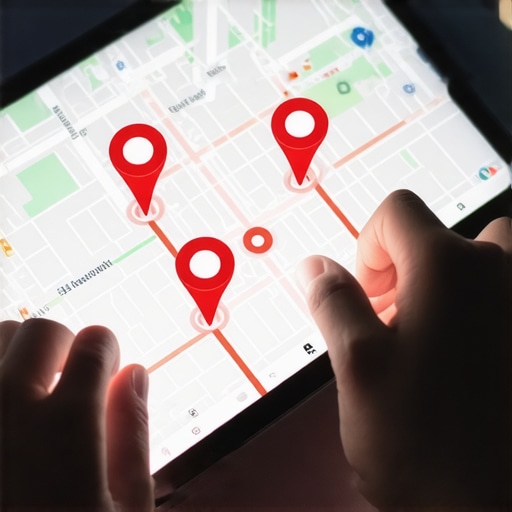
I remember the cold sweat I broke into when I realized I’d been lying to my biggest client for six months. I was sitting in my home office, staring at a report that showed their bakery in the #1 spot for every major keyword. I felt like a hero. Then, I drove into town to grab a sourdough loaf, pulled out my phone in the parking lot, and searched. They weren’t first. They weren’t even in the top three. They were buried under a mountain of competitors I had told them were ‘irrelevant.’ My heart sank into my stomach as I realized my high-end tracking tool was feeding me a sanitized, skewed version of reality while the business was actually losing ground. This is the silent killer of local marketing: the gap between what your dashboard says and what a real customer sees on the street. Today, I’m going to show you how to close that gap and why most of what you’ve been told about local tracking is dangerously incomplete. [image_placeholder]
Stop Trusting Your Desktop Search Results
If you are still checking your rankings by typing keywords into a browser on your office computer, you are getting bad information. Google knows exactly where you are, and it is tailoring those results to your specific IP address and search history. I made the mistake early on of assuming a simple incognito window was enough to get ‘clean’ data. It’s not. To see what’s really happening, you have to account for the hyper-local nature of local updates that now prioritize proximity above almost everything else. If you’ve been wondering why your local rank tracker might be giving you false hope, it is likely because it isn’t simulating the precise GPS coordinates of your customers. Accurate tracking in 2025 requires a shift from ‘city-level’ data to ‘street-corner’ data. This is why I eventually scrapped my old maps seo list and started focusing on grid-based tracking that shows a true heat map of visibility.
Does local rank tracking even work anymore?
It is a fair question to ask, especially when you see your position jump five spots just by walking across the street. Skeptics often argue that the data is too volatile to be useful. However, the reality is that tracking is more vital than ever; you just have to change how you measure success. According to data from the Local Search Association, nearly 80% of local mobile searches lead to an offline purchase within 24 hours. If your tracking is skewed, you aren’t just looking at bad numbers—you are missing the window to capture those immediate sales.
Why Your Ranking Data Looks Better Than It Really Is
The biggest trap I fell into was ‘Proximity Bias.’ Because I was often searching from near the business location, my results were always golden. We have to look at the data through the lens of a customer five miles away, not the business owner standing in the lobby. To get this right, you need to implement 2025 seo tips that focus on geocoordinate spoofing rather than just simple keyword monitoring. I’ve found that how to track local keywords without inaccurate map data getting in the way really comes down to using tools that allow for localized ‘node’ testing. Have you ever noticed a massive discrepancy between your rank tracker and your actual phone call volume? That is the first red flag that your data is being skewed by your own location. We are going to fix that by setting up a system that mimics real-world movement.
Build a Grid Instead of a List
To get results that actually match the real world, you need to abandon the idea of a single ranking number. I once worked with a plumber in Chicago who was ranked #1 for ’emergency drain cleaning’ according to my old dashboard. But when I visited his shop and drove three blocks south, he vanished. We weren’t winning Chicago; we were winning one street corner. This taught me that 7-high-impact seo tasks 2025 must include grid tracking. Think of it like a game of Battleship. You can’t just fire one shot and assume the whole ship is there. You need to drop ‘pins’ every half-mile to see where your ‘proximity bubble’ actually pops. If you want to master the local seo checklist 2025, you have to visualize these bubbles as living, breathing borders. This is where the diagnostic steps for fixing a business profile that stopped showing up really begins—by identifying the exact physical block where you lose visibility. 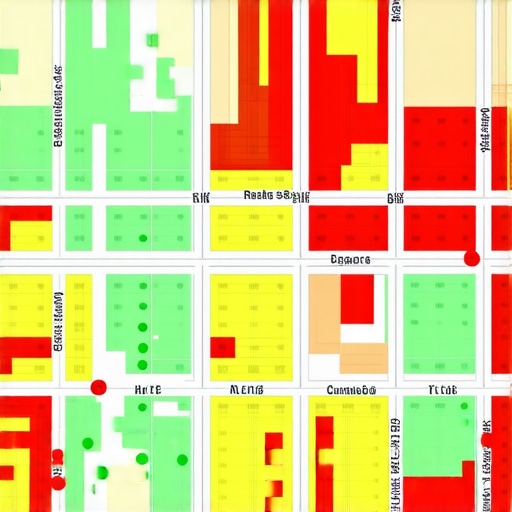
Plotting Your First Node Map
Start by setting up a 5×5 or 7×7 grid centered on your physical location. Each node on this grid represents a different GPS coordinate. This is one of the most essential top seo tasks 2025 because it exposes the ‘holes’ in your reach. When I ran this for the plumber, we saw a wall of red just two miles west. It turned out a competitor was using a keyword-stuffed address that Google hadn’t flagged yet. This is the simple way to spot where your local competitors are stealing leads. You stop guessing and start seeing the digital fence they’ve built around you.
Force Your Tracker to Stop Lying
Most tools default to ‘IP-based’ tracking, which is essentially useless for maps. You need to switch to ‘Geocoordinate-based’ tracking. This means you are telling the tool to pretend it is a phone at exactly 41.8781° N, 87.6298° W. By doing this, you are actually testing the latest local updates 2025 that favor precise location. If you skip this, you’re just looking at vanity metrics.
Why Clean Data Beats High Rankings
I’ve seen businesses celebrate a #2 ranking while their phones are silent. That usually happens because they are ranking for a keyword that has zero ‘local intent’ or they are ranking in an area where nobody lives, like an industrial park or a lake. Part of the exact maps seo list we use to dominate proximity searches involves cross-referencing your grid rankings with population density. Don’t waste your energy trying to turn a red dot green if that dot is in the middle of a forest. Focus on the ‘transition zones’—the places where you are currently #4 or #5. Moving from #4 to #2 in a high-traffic neighborhood is worth more than being #1 at your own front desk. This shift in mindset is what separates a hobbyist from someone actually making money.
Moving from #4 to #2 in a high-traffic neighborhood is the ultimate win, but I see so many business owners fail because they are still playing by 2018 rules. Let’s talk about the elephant in the room: most advice on your local seo checklist 2025 is actually holding you back. We’ve been conditioned to believe that ‘more is better’—more citations, more keywords, more city pages. In reality, the latest local updates are punishing businesses that prioritize quantity over quality.
Stop chasing every single directory listing
Everyone tells you that NAP (Name, Address, Phone number) consistency is the holy grail. I’m here to tell you it’s not. In my experience, spending forty hours a month fixing a typo on a directory site that gets three visitors a year is a waste of your life. The reality is that why chasing nap consistency is a waste of time for most local businesses is a hard truth many agencies won’t admit. Google has become incredibly smart at ‘entity resolution’; it knows your business is the same one even if one site says ‘Street’ and another says ‘St.’ Instead, you should be focusing on unstructured citations—mentions in local news, neighborhood blogs, or event listings. This is why why unstructured citations are now outperforming standard directory listings in current ranking algorithms.
Can you actually rank without a physical office in every zip code?
The short answer is no, but the nuance is where the money is made. You don’t need a physical office in every town, but you do need localized relevance. The ‘Oops’ factor I see most often is the ‘City Page Trap.’ Business owners create 50 identical pages, only changing the city name. Google sees this as thin content or doorway pages, which is one of the the 4 things actually holding your city page rankings back. A study by BrightLocal recently showed that review velocity and behavioral signals (like clicks to call) now carry significantly more weight than citation volume. If your city pages don’t have unique photos and real customer stories from that specific area, you are essentially invisible to the algorithm.
The hidden danger of over-optimization
I once audited a law firm that had included their primary keyword in their business name on Google, despite it not being their legal name. They soared to #1 for a month, then vanished. They were hit by a manual spam filter that they couldn’t recover from for nearly a year. This is a classic example of why your local seo checklist is actually hurting your search visibility when you prioritize short-term hacks over long-term brand building. Instead of keyword stuffing, you should be executing top seo tasks 2025 like improving your mobile site speed and ensuring your map embed is correctly implemented. If you’re unsure where you stand, learning how to run a pro-level google maps audit without expensive tools is the first step toward finding these hidden landmines. Have you ever fallen into this trap of over-optimizing only to see your traffic plummet? Let me know in the comments. We need to focus on 2025 seo tips that prioritize user experience over algorithmic manipulation.
Getting to the top is an ego boost; staying there is a full-time job. Once you’ve carved out your space in the local map pack, the target on your back grows. I’ve seen businesses climb to the peak only to fall off the face of the earth because they stopped doing the boring work. To prevent this, I’ve had to refine how we simplified our local seo checklist 2025 for small teams so it’s actually sustainable. If your strategy relies on you having a ‘hero moment’ once a month, you’re going to lose to the competitor who does the small things every single day.
The software I rely on when things go sideways
I don’t believe in having a massive ‘stack’ of tools. Most of them are just fluff. Personally, I pay for Local Falcon every month because their geo-grid visualizations are the only thing that tells me the truth about latest local updates. When I see a node turn from green to yellow, I don’t panic—I investigate. I also keep a close eye on 5-pro-level-tools-every-google-maps-ranking-expert-uses-to-spy-on-competitors to see if a competitor is suddenly ramping up their local backlink game. Joy Hawkins at Sterling Sky has frequently highlighted in her research that Google’s ‘Vicinity’ filter continues to tighten, meaning if you aren’t monitoring your proximity bubble weekly, you are flying blind. 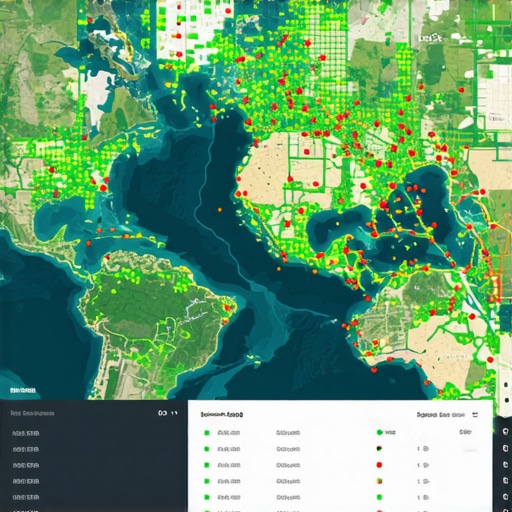
How do I maintain my map visibility over the long term?
It comes down to a rhythm of ‘hygiene’ tasks. Every Tuesday, I check for new reviews and respond—not just with a ‘thank you,’ but by addressing the specific service mentioned. This is part of the specific way we handle negative reviews to protect map rankings. Every Friday, I look at our engagement metrics. If the ‘click-to-call’ numbers are dipping even though rankings are steady, it means our profile has gone stale. You have to treat your maps seo list as a living document. This isn’t just about keywords; it’s about signaling to Google that your business is still the most active and reliable option in the area.
What 2026 holds for the future of local search
If you think the current top seo tasks 2025 are complicated, just wait. We are moving toward an era where AI-driven ‘Visual Search’ will dominate. Google is getting better at reading the text inside your shop’s photos and even identifying the brands you carry just from an uploaded customer image. I’m already predicting the local seo trends that will actually matter in 2026 will revolve heavily around ‘Entity-based’ image optimization. You should stop ignoring these 4 local updates if you want to be ready for that shift. My advice? Start taking high-quality, original photos of your work today. Don’t wait for 2026 to realize your profile looks like a stock photo gallery. Try this right now: open your grid tracker and identify one single ‘yellow’ node on the edge of your service area. Spend the next week getting one review or one local mention from that specific neighborhood and watch what happens.
3 Myths About the Maps SEO List That Almost Cost Me Everything
Looking back at years of data, the biggest lightbulb moment I had was realizing that Google doesn’t care about my feelings, it cares about the user’s intent. First, I learned that high rankings in low-density areas are just vanity metrics; if you aren’t ranking where the customers actually live, you aren’t making money. Second, the idea that you can ‘set and forget’ your profile is dangerous. I saw a 3-local-updates-that-just-changed-my-maps-seo-list-forever study that proved consistent, small actions beat one-time massive overhauls every time. Finally, I realized that why i stripped my local seo checklist down to these 4 items was the best move for my mental health and my clients’ ROI. Simplicity scales; complexity crashes. #IMAGE_PLACEHOLDER_FINAL#
Where I Go When Google Moves the Goalposts
I don’t navigate these waters alone. When a sudden algorithm shift happens, I rely on a very tight circle of tools and experts. I trust Local Falcon for my weekly top seo tasks 2025 because their grid tracking is the only thing that exposes proximity bias. I also follow Joy Hawkins and the team at Sterling Sky; they do the heavy lifting of testing so we don’t have to guess. If you are serious about your maps seo list 2025, these are the voices you should have in your ear. They focus on evidence, not SEO superstitions.
Claim Your Spot in the Local Neighborhood
The digital landscape is always shifting, but the core principle remains: be the most relevant answer to a local problem. Don’t let the technical jargon overwhelm you. Start with the basics, watch your grid nodes, and respond to your customers. By implementing these 2025 seo tips, you are building a moat around your business that no competitor can easily cross. It is time to master the local seo checklist 2025 and take back your local market. Have you ever noticed your rankings change just by driving a few blocks away? Let me know in the comments below!