
Why Your Local Rank Tracker Might Be Giving You False Hope
Why Your Local Rank Tracker Might Be Giving You False Hope
You log into your SEO dashboard, and there it is: a bright green “#1” next to your primary keyword. You’re thrilled. You’re dominating the city. But then you look at your phone. No new leads. No increase in foot traffic. No “Request a Quote” emails. You start to wonder: If I’m ranking at the top, why is my phone silent?
As a specialist in google business profile seo, I see this scenario play out every single week. Business owners are being misled by an outdated metric: the single-point numerical ranking. This is what I call the “Ranking Illusion.” The truth is that a traditional google maps rank tracker that provides a single rank for an entire city is not just inaccurate – it’s dangerous for your business strategy.
The core of the problem lies in the “Proximity Trap.” Most rank trackers check your position from a single data point, often the center of the city or, worse, from the physical location of your business. Of course you rank #1 when you’re standing in your own lobby! But search visibility is fluid. It changes block by block, neighborhood by neighborhood. To win in 2026, you must understand that “Discovery Phase” (the Local Pack on a desktop) and “Action Phase” (the Google Maps App on a mobile device) are two entirely different battlefields.
The Proximity Trap: Why Single-Point Tracking Fails
Google’s local algorithm is obsessed with proximity. It is arguably the most powerful ranking signal in the local ecosystem. However, traditional tools treat a city like a monolithic block. They tell you that you rank #3 in “Chicago” or #1 in “Austin.” This is a technical failure of the highest order.
Consider a research case study from the Local Search Forum involving a service business in a city of 200,000 people. On a standard rank tracker, the business showed a consistent #1 position for its main keywords. However, when we looked deeper, we found a startling discrepancy. While the business ranked #1 when the search was performed from the outskirts of the city (where competition was low), it completely disappeared from the top 20 once the user moved into specific high-density neighborhoods just three miles away.
This happens because Google’s proximity filter creates a “visibility radius.” If your local seo ranking factors aren’t strong enough to overcome the distance, your visibility drops off a cliff the moment a user moves a few blocks away from your front door. Proximity is the strongest signal for the Maps App, but as we move into 2026, prominence is what allows you to “break” the proximity filter and rank further away.
To understand how to navigate these complexities, you should check out our guide on How to Track Local Keywords Without Inaccurate Map Data Getting in the Way.
Local Pack vs. Google Maps: Two Different Beasts
One of the biggest mistakes SEO professionals make is treating the Local 3-Pack (the results you see on a standard Google Search) and the Google Maps App as the same entity. They are not. They serve different user intents and utilize different algorithmic weights.
- The Local Pack (Discovery Intent): Users here are often in the research phase. Google prioritizes Prominence – your reputation, authority, and overall brand strength. This is where you want to rank higher on google maps for broad, “best [service] near me” searches.
- Google Maps App (Action Intent): Users here are often ready to move. They are looking for the path of least resistance. Here, Google prioritizes Proximity and real-time signals.
A critical factor often ignored by a standard google maps rank tracker is the “Openness” signal. Google’s real-time visibility filter can hide your business if you are currently marked as “Closed.” If your rank tracker runs its report at 2:00 AM while your business is closed, but your competitors are open 24/7, your data is fundamentally flawed. You might be losing the “Action Phase” simply because of your operating hours, a factor no static tracker can accurately account for without real-time grid analysis.
To truly rank google business profile assets effectively, you must distinguish between these two interfaces. The Pack is about being the “best” choice; the Map is often about being the “closest” or “currently available” choice.
The 2025-2026 Algorithm Shift: Beyond Backlinks
The days of ranking a local business solely through high-DA guest posts and generic directory citations are over. As we move through 2025 and into 2026, the algorithm has shifted toward “real-world community involvement” and AI-driven relevance.
Google’s Search Generative Experience (SGE) and AI Overviews are now synthesizing information from across the web to determine “local relevance.” It’s no longer just about having the keyword in your title; it’s about whether the local community associates you with that service. Google is looking for hyperlocal signals: mentions on local news sites, sponsorships of local little league teams, and reviews that mention specific neighborhood landmarks.
We are seeing that generic backlinks are losing value compared to these hyperlocal signals. If you want to improve google maps ranking, you need to prove you exist in the physical world, not just the digital one. This shift is detailed further in our analysis of the Latest Local Updates 2025: What Your Business Needs to Know.
AI is also changing how “local relevance” is calculated. Google’s LLMs can now understand the context of your business through the photos you upload and the specific phrasing used in your customer reviews. If your reviews frequently mention “best emergency plumber in North Dallas,” Google builds a semantic map that associates you with that specific geography and service, far more effectively than any meta tag ever could.
The Solution: Grid-Based Heatmaps & Local SEO Software
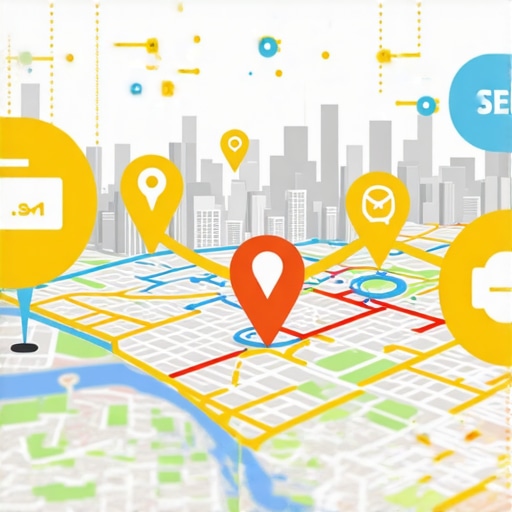
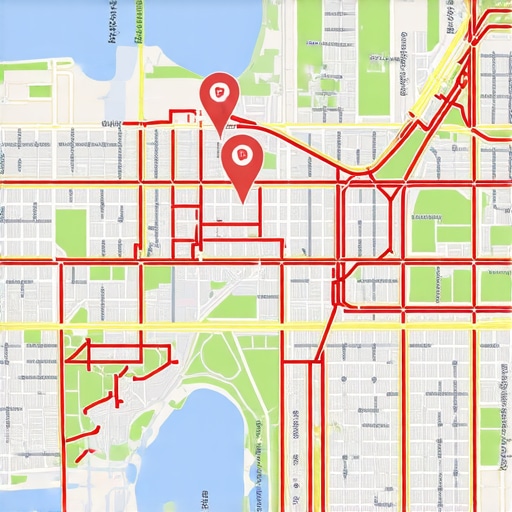
If single-point tracking is the problem, what is the solution? The answer is Geogrid Heatmaps. Instead of checking your rank from one spot, a modern local seo software solution like SEO Viper Tools plots your ranking across a 13×13 or 15×15 grid of coordinates over your entire service area.
This visualization changes everything. You might see a “Green Zone” of #1 rankings immediately around your office, but a “Red Zone” of #15 rankings just two miles East. This data is actionable. If you see a ranking dead zone in a specific neighborhood, you don’t just “do more SEO.” You execute a targeted strike:
- Gather reviews from customers in that specific zip code.
- Create location-specific landing pages for that neighborhood.
- Run geo-fenced local ads to increase brand prominence in that specific grid point.
Using local seo tools that provide this level of granularity allows you to stop guessing and start dominating. You can finally see the “Proximity Wall” where your visibility dies and work systematically to push that wall further out, expanding your “Green Zone” and capturing more market share.
3 Red Flags Your Current Local SEO Strategy is Failing
How do you know if you are a victim of the Ranking Illusion? Check for these three red flags:
- High Rankings but Zero Phone Calls: If your google maps rank tracker says you are #1 but your GMB insights show a flatline in calls and direction requests, you are likely only ranking in a very small, low-traffic radius or for keywords with zero local intent.
- Ranking Only for Branded Terms: If you only show up when people search for your exact business name, you aren’t doing Local SEO; you’re just existing. Real growth comes from ranking for “unbranded” terms like “lawyer near me” or “roof repair.”
- Ranking “Ghosting”: If you appear in the top 3 one day and disappear the next, your profile likely lacks the “Prominence” signals needed to stabilize your position against the “Openness” and “Proximity” filters.
If you recognize these signs, you need a professional intervention. Read our checklist on 3 Red Flags That Mean Your Local SEO Package Is Failing to diagnose the root cause.
Conclusion & Action Plan
Local SEO in 2026 is no longer a “set it and forget it” game of keywords and citations. It is a game of geographic dominance. To win, you must stop relying on vanity metrics that offer false hope and start looking at the reality of the map.
Your action plan is simple: Stop using trackers that give you a single number. Perform a comprehensive Local Business Profile Audit to identify where your ranking drops are actually occurring. Then, leverage advanced local seo tools to visualize your visibility through grid-based heatmaps. Focus on building prominence through hyperlocal signals and real-world engagement.
The goal isn’t just to rank #1; the goal is to dominate the entire map. Don’t let a “false positive” from an outdated tracker keep you from the customers who are searching for you just three blocks away.