
3 Red Flags That Mean Your Local SEO Package Is Failing
3 Red Flags That Mean Your Local SEO Package Is Failing
It is 8:00 AM on a Tuesday. You are a business owner – perhaps a plumber in Chicago, a personal injury lawyer in Los Angeles, or a dentist in Miami. You sit down with your coffee, open your laptop, and check your lead tracking software. Zero calls. You check your Google Business Profile insights. The graph is a flat line, a digital EKG showing no signs of life. Yet, every month, like clockwork, $1,500 leaves your bank account to pay for a “Local SEO Package.”
If this scenario feels familiar, you aren’t alone. In the 2026 local search landscape, the gap between “paying for SEO” and “getting results” has become a canyon. With Google now processing over 9.5 million searches per minute and generating over 5 trillion searches annually (according to recent Semrush and industry data), the stakes have never been higher. However, the strategies that worked in 2022 – or even 2024 – are now obsolete. The December 2025 Core Update was a watershed moment, where approximately 59% of local domains saw significant ranking shifts, punishing those who relied on automated, low-effort tactics.
As an SEO strategist who has spent years diagnosing failing campaigns for global brands and US-based small businesses, I’ve seen it all. A local SEO package should be an investment in growth, not a monthly donation to an agency’s overhead. To help you navigate this, I’ve identified three critical red flags that indicate your google business profile seo is failing. If your current provider is guilty of these, it’s time to stop the bleeding. Before we dive into the diagnosis, ensure you are grounded in the basics by reviewing these Top SEO Tasks 2025: Essential Strategies for Digital Success.
Red Flag #1: The “Abandoned Storefront” Syndrome (GBP Neglect)
The most common reason local SEO packages fail is the “set it and forget it” mentality. In the early days of Google My Business, you could optimize a profile once, build a few citations, and sit back. In 2026, that approach is a death sentence. Google’s algorithms now prioritize “Freshness” and “User Interaction Signals” more than ever. If your agency isn’t treating your Google Business Profile (GBP) like a living, breathing social media platform, they are failing you.
The Death of Static Profiles
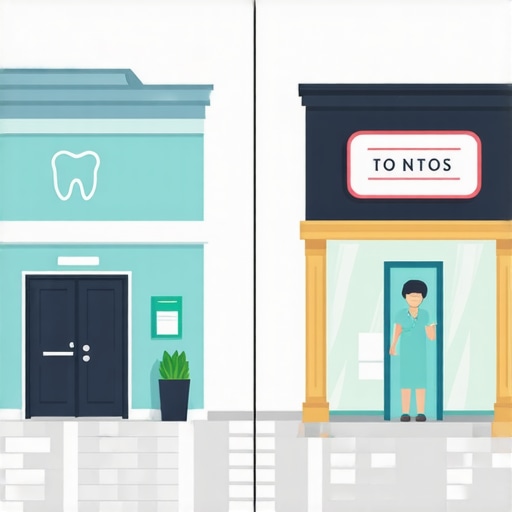
I often tell my clients that a GBP is like a digital storefront. If a customer walks by and sees dust on the windows, outdated posters, and a “closed” sign during business hours, they move on. Google’s AI does the same. When an agency provides local seo services, they must be active. This means posting weekly updates, responding to every review (positive or negative) within 24-48 hours, and constantly refining the “Services” and “Products” sections.
Google’s ranking algorithm for the local map pack is built on three pillars: Proximity, Relevance, and Prominence.
- Proximity: How close is the searcher to your business? (This is the hardest to manipulate, but hyperlocal signals help).
- Relevance: Does your profile content match the search intent?
- Prominence: How well-known is your business online?
If your agency isn’t actively feeding the “Relevance” and “Prominence” pillars through consistent activity, your google maps seo will stagnate. “Near-me” searches in 2026 are increasingly ignoring static profiles in favor of businesses that show recent photos, updated inventory, and active Q&A sections. If your agency hasn’t asked you for new photos of your team or your latest projects in three months, that is a massive red flag. For a deeper look at why this happens, read Why Your Google Business Profile Ranking Flatlined and How We Restarted It.
The “Ghosting” Agency
In my experience, many agencies hide behind automated reports. They’ll show you a “Local Map Pack” report that looks green, but when you actually search from your phone three blocks away, you’re nowhere to be found. They are neglecting the “hyperlocal” signals required in 2026. Without constant optimization, your profile becomes an abandoned storefront in a neighborhood that is rapidly changing.
Red Flag #2: The “6-12 Month Results” Trap
We’ve all heard it: “SEO takes time.” While it’s true that you won’t rank #1 for “Lawyer in New York” overnight, the “6-12 month” excuse has become a shield for incompetent agencies to hide behind while they do zero actual work. This is what I call the “Results Trap.”
Micro-Wins vs. Long-Term Rankings
If you are paying for a google maps ranking service, you should see “micro-wins” within the first 60 to 90 days. What does a micro-win look like?
- An increase in “Discovery” searches in your GBP insights.
- A boost in “Photo Views” compared to competitors.
- Higher rankings for “long-tail” local keywords (e.g., “emergency water heater repair” instead of just “plumber”).
- A measurable uptick in phone calls or website clicks.
I’ve seen agencies lock clients into 12-month junk contracts, claiming that the “algorithm is slow.” In 2026, the algorithm isn’t slow; it’s hyper-active. With the right rank higher on google maps strategy, we can often see movement within weeks, not months. If your agency cannot show you a trajectory of improvement by month three, they are likely just sitting on your account, waiting for the natural “ebb and flow” of the internet to do the work for them.
The Transparency Gap
The “trap” often involves a lack of transparency. A reputable provider will give you access to a google maps rank tracker that shows your position across a grid, not just a single point. If your agency only sends you a PDF once a month with three cherry-picked keywords, they are hiding the truth. You need to see how you are performing across your entire service area. If they are making excuses about “volatility” without explaining the why behind it, they are likely out of their depth. Stay ahead of these shifts by checking out 3 Local Updates That Just Broke Your 2026 Maps SEO List.
Red Flag #3: Obsession with “Dead” Metrics (Citations & Volume)
If your SEO agency is still bragging about the 200 “directory citations” they built for you this month, you are living in 2015. In the 2026 AI-driven search era, citation volume is a “dead” metric. While having a consistent NAP (Name, Address, Phone number) is a baseline requirement, it is no longer a ranking factor that will move the needle.
The Shift to Experience Signals
Google’s AI-powered Search Generative Experience (SGE) and the latest proximity updates have shifted the focus toward “Experience Signals.” Google wants to know: Are people actually visiting your store? Are they clicking your “Directions” button and then actually following through? Are they mentioning specific services in their reviews?
An agency that focuses on “citation volume” is likely using outdated local seo tools that automate low-quality link building. Instead, they should be focusing on:
- Review Velocity and Sentiment: Not just getting 5 stars, but getting reviews that mention your keywords naturally (e.g., “The best roofing repair in Dallas”).
- Local Justifications: Ensuring your profile triggers the “Sold here” or “Provides” snippets in the Map Pack.
- AI Click-Through Optimization: Using google business profile optimization to make your listing more “clickable” than the two businesses above you.
The “Stop Chasing Citations” Mantra
I tell my team and my clients: “Stop chasing citations and start chasing conversions.” If your report is full of links to obscure directories like “YellowPages-Bulgaria” and you’re a florist in Ohio, your agency is wasting your budget on “busy work.” They are checking boxes rather than driving revenue. In 2026, Google values a single mention on a local neighborhood blog or a local news site 100x more than 1,000 directory citations. If your agency isn’t talking about hyperlocal signals and AI-readiness, they are stuck in the past. Learn more about this shift here: Stop Chasing Citations and Try These SEO Tasks 2025 Instead.
How to Audit Your Current Local SEO Package
If you suspect your package is failing, don’t just take my word for it. You need to perform a clinical audit. You wouldn’t let a doctor perform surgery without a second opinion; why let an agency spend your marketing budget without a check-up? Use a google business profile audit tool to get an unbiased view of your performance.
5 Questions to Ask Your Provider Today
- “Can you show me our ranking grid for our top 5 keywords across a 5-mile radius?” (If they can’t provide a grid, they aren’t tracking local SEO correctly).
- “What specific ‘Experience Signals’ have you optimized for in the last 30 days?” (Listen for mentions of reviews, user engagement, or photo updates).
- “How has the December 2025 Core Update specifically impacted our local strategy?” (If they say “it didn’t,” they aren’t paying attention).
- “Why are we still paying for citation building instead of local link building or GBP posting?”
- “What is our current conversion rate from ‘View’ to ‘Call’ on our profile, and how does it compare to last quarter?”
A failing agency will give you vague answers about “the algorithm” or “building authority.” A winning agency will give you data, screenshots, and a clear plan for the next 30 days. To master the specifics of what a healthy profile looks like, consult the Master the Local SEO Checklist 2025: Boost Your Visibility Today.
The Technical Reality of 2026 Proximity
One final technical note: The 2026 proximity updates have made standard “city landing pages” (e.g., yoursite.com/service-in-city) much less effective. Google now recognizes when a business is trying to “spoof” a location. If your agency is building dozens of thin-content city pages without actual hyperlocal signals (like local photos, local reviews, and local backlinks), Google is likely filtering those pages out of the search results entirely. You need a strategy that focuses on hyperlocal relevance, not just broad city-wide targeting.
Conclusion: Don’t Settle for Digital Stagnation
In the world of local search, you are either moving forward or you are being buried by competitors who are using modern local seo tools and strategies. If your current local SEO package shows the red flags of neglect, “the results trap,” or an obsession with dead metrics, it is time to pivot.
Your Google Business Profile is the most valuable piece of digital real estate you own. Don’t let a “set it and forget it” agency turn it into a ghost town. Whether you choose to audit your profile yourself or switch to a provider that utilizes advanced local seo software like SEO Viper, the time to act is now. The 5 trillion searches happening this year won’t wait for your agency to catch up to 2026.
Ready to see the truth about your rankings? Start by implementing a real strategy today and reclaim your spot at the top of the map pack.