How We Optimized a Business Profile for Proximity Without Spamming Keywords
How We Optimized a Business Profile for Proximity Without Spamming Keywords
The “Proximity Problem” is the single most frustrating hurdle for local business owners today. You’ve likely seen it: your business ranks #1 when you’re standing in your own parking lot, but as soon as you drive three blocks away, you vanish from the local map pack. In the past, the “quick fix” was simple – and dangerous. Business owners would simply stuff their business names with keywords, changing “Smith & Sons” to “Smith & Sons Best Plumber New York City Emergency Repair.” While this might have provided a temporary boost in years past, doing so in 2025 is a fast track to a hard suspension.
As a specialist in google business profile seo, I have seen the algorithm evolve from a simple distance-based calculation into a complex evaluation of relevance and prominence. The goal is no longer just to be the closest; it is to be the most relevant and authoritative option within a specific geographic radius. To succeed in 2025 and 2026, you must learn how to “stretch” your proximity bubble by maximizing other ranking factors. If you want to build a sustainable presence, you need to Master the Local SEO Checklist 2025: Boost Your Visibility Today and move away from the spammy tactics that no longer work.
In this guide, I will break down the exact framework we used to optimize a service-area business profile, expanding its reach from a two-mile radius to a fifteen-mile radius without once resorting to keyword stuffing in the business name. We will focus on the three pillars of local search: proximity, relevance, and prominence, and how to manipulate the latter two to overcome the limitations of the first.
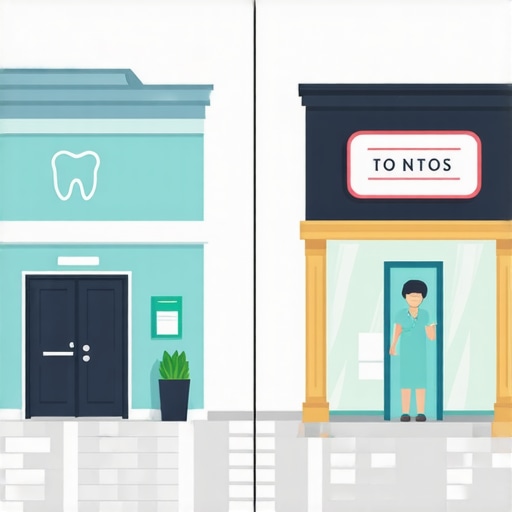
The Death of the Keyword-Stuffed Business Name
For years, the most significant ranking factor in local SEO was the presence of keywords in the business title. However, Google’s 2025 updates have signaled a definitive end to this era. Recent research shared across Reddit communities and deep-dive technical audits by Zag Interactive confirm that Google is actively penalizing or suspending profiles that use descriptive keywords instead of their legal business name. The algorithm has become incredibly proficient at cross-referencing your Google Business Profile (GBP) with state registries, tax documents, and official websites.
When you attempt google business profile optimization by adding “Best HVAC Repair” to your name, you aren’t just risking a suspension; you are actually confusing the search engine. Google’s 2025 updates prioritize “Search Intent” over exact-match name spam. The engine now understands that if a user searches for “emergency dental care,” a business named “City Dental” with high relevance and recent reviews regarding emergencies is a better result than a business named “Emergency Dental Care City” with no substantive content.
The shift toward “Experience Signals” means that Google looks at how users interact with your profile. If your profile name looks like a string of tags, click-through rates (CTR) often drop because savvy consumers recognize it as spam. This lowers your prominence over time. Instead of focusing on the name, we now focus on the “completeness” of the profile. A 100% complete profile, backed by real-world data and consistent NAP (Name, Address, Phone) information across the web, provides a much stronger foundation for ranking than a keyword-stuffed title ever could.
Expanding the “Ranking Bubble”: The 3 Pillars of Local SEO
To rank google business profile listings effectively, you must understand the trifecta of the local algorithm: Proximity, Relevance, and Prominence. These are not equal weights, and their importance shifts based on the specific industry and search intent.
- Proximity: This is the physical distance between the searcher and your business. It is the hardest factor to influence because you cannot (easily) move your office. In a “Vicinity” update world, Google weights this heavily to prevent one giant brand from dominating an entire city.
- Relevance: This is how well your business matches what the user is looking for. This is where we have the most control. By utilizing deep categorization and detailed service menus, we tell Google exactly what we do.
- Prominence: This is how well-known your business is. It is measured by your backlink profile, the number and quality of your reviews, and your citations across the web.
Our strategy for overcoming a narrow proximity bubble is to “over-optimize” for Relevance and Prominence. If Google sees that your business is significantly more relevant and prominent than the competitor who happens to be two blocks closer to the searcher, the algorithm will often “stretch” your ranking to include that searcher. This is how you The Exact Maps SEO List We Use to Dominate Proximity Searches. We aren’t fighting the proximity factor; we are making our relevance so undeniable that proximity becomes a secondary consideration for the engine.
Strategy 1: Deep Categorization and Service Menus
One of the most overlooked aspects of google business profile seo is the secondary category selection. Most businesses set their primary category and stop there. To rank higher on google maps, you must utilize all ten available category slots – but only if they are truly relevant. For our case study client, we identified that while their primary category was “Plumber,” they were missing out on proximity searches for “Water Heater Repair Service,” “Drain Cleaning Service,” and “Septic Tank Service.”
By adding these secondary categories, we immediately increased the “surface area” of the profile. However, categorization alone isn’t enough. You must also leverage the Service Menu. In 2025, Google uses the text within your service descriptions as a primary source for “justifications” – those small snippets of text in the search results that say “Their website mentions [keyword]” or “Provides [service].”
When filling out your services, avoid a simple list. Instead, use natural, descriptive language. For example, instead of just listing “Leak Detection,” write: “Professional electronic leak detection for residential homes, utilizing non-invasive technology to find hidden pipe bursts.” This provides the semantic depth Google needs to associate your profile with a wider variety of long-tail searches. Utilizing the right local seo tools can help you identify which services your competitors are ranking for, allowing you to fill the gaps in your own profile.
Strategy 2: Hyperlocal Content and Geo-Signals
There is a “Hidden Link” between your website’s organic performance and your map ranking. To rank higher on google maps, your website must prove to Google that you are an authority in specific neighborhoods, not just a general city area. If your office is in North Austin, but you want to rank in South Austin, your website needs to have “South Austin” geo-signals.
We implemented a hyperlocal content strategy that involved creating dedicated location pages for every major suburb the business served. These weren’t just “cookie-cutter” pages. Each page included:
- Descriptions of local landmarks and neighborhoods served.
- Testimonials from customers specifically in that zip code.
- Embedded Google Maps showing the service area or the route from that suburb to the main office.
- Internal links to The Hidden Link Between Map Embeds and Organic Local Traffic.
By embedding a map on these pages, you create a digital “handshake” between your website and your GBP. Furthermore, we ensured that the business was listed in hyperlocal directories – not just the big ones like Yelp or Yellow Pages, but neighborhood-specific blogs and chamber of commerce sites. This builds a “geographic footprint” that tells Google your prominence extends far beyond your front door. This is a core component of any google maps ranking service that actually delivers long-term results.
In the 2026 local algorithm, “Experience Signals” will also look at how many people from a specific area are searching for your brand name. By running highly targeted local awareness ads in those distant suburbs, we increased brand search volume from those areas, which further signaled to Google that we were relevant to those residents despite the distance.
Strategy 3: Review Velocity and Semantic Sentiment
Reviews have always been a cornerstone of local map pack seo, but the way Google interprets them has changed. It is no longer a simple numbers game. A business with 500 reviews might be outranked by one with 150 reviews if the latter has better “Review Velocity” and “Semantic Sentiment.”
Review velocity refers to how consistently you receive feedback. If you got 100 reviews three years ago and none since, Google views your business as potentially stagnant or closed. We implemented an automated system to ensure a steady stream of 2-3 reviews per week. More importantly, we focused on the *content* of the reviews. We coached the client to ask customers to mention the specific service and the neighborhood. For example: “Could you mention that we fixed your AC in Overland Park?”
When a customer writes, “They did a great job on my AC repair in Overland Park,” Google’s NLP (Natural Language Processing) engine extracts “AC Repair” (Relevance) and “Overland Park” (Proximity/Location). This creates a user-generated signal that you serve that area. This is much more powerful than you claiming to serve that area in your own description. If you are struggling to get this momentum, you should read How to Get More Google Reviews Without Constantly Chasing Customers to streamline your process.
Furthermore, responding to every review is non-negotiable. Your responses should also be professional and naturally include service-related keywords. This isn’t for the customer; it’s for the algorithm to see an active, engaged business owner.
Auditing Your Progress in 2026
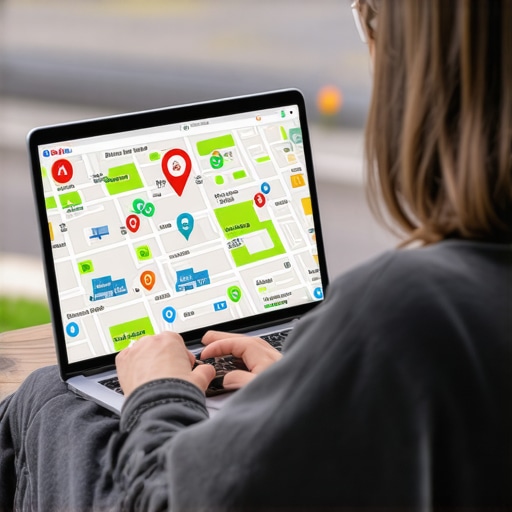
You cannot manage what you do not measure. Traditional rank trackers that give you a single “average” position for a city are useless for proximity optimization. To truly understand your reach, you need a google maps rank tracker that provides a grid-based heat map. This tool shows you exactly where your ranking “drops off.”
When we started with our client, the heat map showed a “Green Zone” (positions 1-3) of only about 1.5 miles. Outside of that, it was a “Sea of Red” (positions 10+). After six months of implementing deep categorization, hyperlocal content, and review velocity strategies, the Green Zone expanded to nearly 8 miles in every direction. This data-driven approach allows you to see which neighborhoods are lagging so you can double down on geo-specific content for those areas. For those looking to do this themselves, I recommend checking out How to Run a Pro-Level Google Maps Audit Without Expensive Tools.
As we move into 2026, keep an eye on “Mobile-First Proximity.” Google is increasingly prioritizing the real-time location of the mobile user. If your website is slow or not optimized for mobile, your map rankings will suffer, regardless of how good your GMB profile looks. The integration of local search and mobile performance is becoming inseparable.
Conclusion: Sustainable Growth Over Quick Fixes
Optimizing for proximity in 2025 and 2026 is a marathon, not a sprint. The days of “hacking” the system with keyword-stuffed names and fake citations are over. Today, the winners are the businesses that provide the most comprehensive data to Google and prove their local authority through real customer interactions and hyperlocal relevance.
By focusing on the three pillars – Proximity, Relevance, and Prominence – you can effectively “stretch” your ranking bubble and reach customers who were previously out of your reach. Remember that your Google Business Profile is a living entity; it requires constant updates, new photos, regular posts, and a steady flow of reviews to remain competitive. If you are ready to take your local presence to the next level, I encourage you to download our full local seo checklist 2025 or visit seovipertools.com to improve local search presence and dominate your local market. Sustainable growth is the only way to survive the ever-changing landscape of Google Maps.