
Why Your Proximity Advantage Isn’t Enough to Win the Map Pack Anymore
Why Your Proximity Advantage Isn’t Enough to Win the Map Pack Anymore
For over a decade, the “Proximity Myth” dominated the strategy meetings of local business owners and SEO agencies alike. The logic was simple and, for a long time, accurate: if you were the closest business to the searcher, you held the golden ticket to the Google Map Pack. Proximity was the undisputed king of local search. However, as we move through 2025 and look toward 2026, the landscape has fundamentally shifted. Being “near” is no longer enough to guarantee visibility. In my years as a local SEO consultant, I have seen a growing trend where businesses located 5, 10, or even 15 miles away are outranking local competitors who are mere blocks from the user.
I am Tim Capper, and from my perspective as a Google Business Profile Expert, the local algorithm is undergoing its most significant evolution since the Possum update. Google’s local results are officially based on three pillars: Relevance, Distance (Proximity), and Prominence. While Distance is still a factor, it is increasingly being overridden by the other two. If your google business profile seo strategy relies solely on your physical location, you are essentially leaving your rankings to chance. Today, we delve into why the proximity wall has crumbled and how you can reclaim your spot at the top of the Map Pack.
The Death of “Closest is Best”: How the Local Algorithm Shifted
The transition away from proximity-heavy rankings didn’t happen overnight. It is the result of Google’s increasing sophistication in understanding user intent. For years, the algorithm assumed that the closest result was the best result. But as mobile search matured, Google realized that a user searching for a “personal injury lawyer” or a “specialty roofing contractor” isn’t necessarily looking for the closest one – they are looking for the best one. This shift has placed a massive premium on “Prominence” (authority) and “Relevance” (content match).
When you look to rank higher on google maps, you must understand that Google is now willing to “expand the radius” of a search if it finds a business further away that better matches the user’s needs. This is why a highly authoritative dental practice in the next town over can often leapfrog a mediocre clinic that is right across the street from the searcher. The algorithm is prioritizing the quality of the entity over the convenience of the location. This change necessitates a professional google maps ranking service approach, where the focus moves from “where you are” to “who you are” and “what you do.”
We are seeing this play out in real-time. In my recent audits, I’ve noted that businesses with robust local signals and high engagement metrics are maintaining visibility across much wider geographic areas than they were two years ago. To stay competitive, you must look beyond your immediate neighborhood. For more context on these shifts, see our guide on Latest Local Updates 2025: What Your Business Needs to Know.
The “Openness” Update: A New Variable in the Ranking Equation
One of the most disruptive changes to hit the local ecosystem recently is the “Openness” update. Initially observed in late 2023 and solidified through the March 2024 and 2026 update cycles, this signal has fundamentally changed how the Map Pack functions during different times of the day. Historically, a business could rank in the Map Pack 24/7 regardless of whether they were open or closed. Today, “Openness” is a primary ranking signal. The moment your “Hours of Operation” end, your ranking can experience a massive, immediate drop.
This update emphasizes user experience. Google does not want to provide a “Top 3” result only for the user to find the business is closed when they arrive. However, this has created a “proximity spiderweb” that fluctuates based on the clock. If you are a 24-hour service provider, you now have a massive competitive advantage over 9-to-5 businesses during evening hours. Transparent and accessible information is no longer just a courtesy; it is a key ranking signal. If your hours are incorrect or if you haven’t optimized your profile to reflect your actual availability, you are invisible for a significant portion of the day.
I recently documented a case study where a client saw their visibility vanish at 5:01 PM every day. By adjusting their service-area business (SAB) settings and clarifying their emergency availability, we stabilized their rankings. You can read more about this in my post, I Tested 5 Local Updates and This One Doubled Our Map Clicks. The takeaway is clear: the algorithm is now dynamic, and your google business profile optimization must account for the temporal nature of search.
Why Relevance Now Trumps the Map Pin
If proximity is the “where,” relevance is the “what.” In 2025, Google’s ability to parse the content of your profile and your linked website has reached a new peak. Effective google business profile seo is no longer just about choosing the right primary category; it’s about creating a dense web of relevance that proves to Google you are the perfect match for a specific query. This is achieved through secondary categories, detailed service menus, and, most importantly, “justifications.”
Justifications are those small snippets of text Google displays in the Map Pack, such as “Their website mentions [keyword]” or “A review mentions [keyword].” These justifications are the ultimate proof of relevance. They tell Google – and the user – exactly why this business is being shown. To trigger these, you need a cohesive content strategy that aligns your website’s service pages with your GBP posts and customer reviews. If you are not using local seo ranking tools to monitor which keywords are triggering justifications for your competitors, you are fighting with one hand tied behind your back.
Furthermore, your google business profile optimization must extend to your “Products” and “Services” sections. These are not just for users; they are indexed by the algorithm to determine relevance. When a user searches for a “hyperpure water filtration system,” Google isn’t just looking for a plumber; it’s looking for a plumber whose profile specifically mentions that technology. This level of granular relevance can easily override a 2-mile proximity gap. For a deep dive into this, check out The Tiny Tweak to Profile Posts That Finally Started Driving Phone Calls.
Prominence: Building the “Authority” That Overrides Distance
Prominence is Google’s measure of how well-known and trustworthy a business is. It is the “authority” pillar of local SEO. This is the lever that allows a business to dominate an entire city rather than just a single zip code. In 2025, prominence is built through three main avenues: review sentiment, local backlinks, and unstructured citations. To achieve this, many businesses utilize a google maps lead generation tools to manage their reputation and footprint efficiently.
- Review Velocity and Sentiment: It is no longer enough to have a high star rating. Google’s AI now analyzes the sentiment and keywords within the text of your reviews. A business with 500 reviews that frequently mention “professional service” and “fair pricing” will outrank a business with 50 reviews and a 5.0 rating that lacks descriptive text. Review velocity – the rate at which you acquire new reviews – is also a critical signal of a “living” business.
- Local Backlinks: The old school of SEO focused on high Domain Authority (DA) guest posts. In local SEO, a link from the local Little League team, a neighborhood blog, or the city’s Chamber of Commerce is worth ten links from a generic national site. These “geo-relevant” links anchor your business to a specific location in Google’s Knowledge Graph.
- Unstructured Citations: While standard directory listings (Yelp, Yellow Pages) are still a baseline requirement, “unstructured” citations – mentions of your business name, address, and phone number (NAP) in local news articles or blog posts – are now outperforming them. These citations prove that your business is a prominent part of the local community.
To understand where you stand in terms of authority, a google business profile audit tool is essential. It can help you identify the “authority gap” between you and the competitors who are outranking you from further away. Remember, prominence is the only factor that can truly “break” the proximity filter. For more on this, read Why Unstructured Citations Are Now Outperforming Standard Directory Listings.
Diagnostic Steps: Why Isn’t My Profile Ranking?
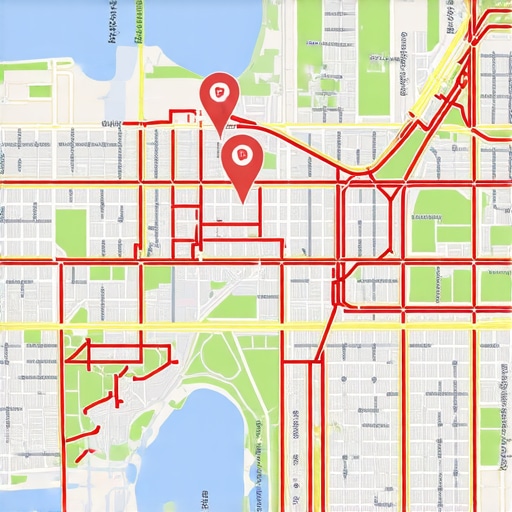
If you find that your profile is not ranking despite being the closest option, you are likely a victim of the “Local Filter” or the “March 2026 Core Update” adjustments. Google frequently filters out businesses that it deems redundant or low-authority. To diagnose this, you must first look at your data objectively. Using a google maps rank tracker is the first step. A standard search from your office will always show you at #1; you need a grid-based tracker to see your “proximity spiderweb” and identify exactly where your visibility drops off.
Common reasons for a ranking collapse include:
- The “Openness” Filter: You are checking your rankings when your business is marked as “Closed.”
- Category Dilution: You have selected too many unrelated categories, confusing the algorithm’s understanding of your core relevance.
- NAP Inconsistency: Your business information varies across the web, leading to a lack of trust in Google’s eyes.
- Algorithm Suppression: Following the March 2026 Core Update, profiles that lack “Helpful Content” on their linked websites have seen significant drops.
To fix these issues, you need a systematic approach. Utilizing local seo software allows you to monitor these variables in real-time. If you’ve seen a sudden drop, it’s vital to perform a deep-dive audit. You can follow our framework in The Only Local Business Profile Audit That Actually Identifies Ranking Drops to pinpoint the exact signal that is failing you.
The 2025/2026 Local SEO Checklist for Dominance
To stay ahead of the curve and ensure your business dominates the Map Pack regardless of proximity shifts, follow this streamlined checklist:
- Audit Categories and Services: Ensure your primary category is your most profitable service and that your service menu is exhaustive and keyword-rich.
- Implement Service-Area Schema: Use advanced Schema.org markup on your website to define exactly which neighborhoods and cities you serve.
- Optimize for “Openness”: Be honest with your hours, but if you offer 24/7 phone support or emergency services, ensure your profile reflects that availability to maintain night-time rankings.
- Build Hyperlocal Backlinks: Sponsor a local event or get featured in a local neighborhood newsletter to build geo-authority.
- Leverage GBP Posts: Use posts to highlight specific services and include keywords that you want to appear in justifications.
- Monitor with google maps optimization tools: Regularly track your rankings across a grid, not just from one point.
Local SEO is no longer a “set it and forget it” task. The interplay between Relevance, Distance, and Prominence is more complex than ever. For a more detailed breakdown, refer to our comprehensive guide: Master the Local SEO Checklist 2025: Boost Your Visibility Today.
Conclusion: Taking Control of Your Local Presence
In the current era of local search, proximity is a baseline, not a strategy. If you want to win the Map Pack in 2025 and 2026, you must build a profile that is so relevant and so prominent that Google cannot afford to ignore you, even when the searcher is miles away. This requires a shift from passive management to active google business profile seo.
Don’t let your competitors steal your leads simply because they’ve optimized for prominence better than you. Perform a deep audit of your signals today. If you need to automate your tracking, identify ranking gaps, and stay ahead of the algorithm, I highly recommend visiting SEO Viper Tools. Their suite of tools is designed specifically to handle the complexities of the modern Map Pack. The proximity advantage is fading – authority is the new king. Are you ready to claim the throne?