
Why chasing NAP consistency is a waste of time for most businesses
I remember the smell of stale coffee and the flickering blue light of my monitor at 2 AM as I meticulously changed ‘Avenue’ to ‘Ave’ on an obscure directory that hadn’t seen a real human visitor since 2012. I was genuinely terrified. I believed that if my client’s Name, Address, and Phone number weren’t perfectly consistent across every corner of the internet, Google would treat them like a digital ghost. Looking back, that was my biggest rookie mistake. I was prioritizing clerical work over real customer connection, and I was chasing ghosts instead of phone calls. Today, I’m going to show you why that obsession is a relic of the past and how you can reclaim hours of your week by focusing on what actually moves the needle in the modern map pack. Have you ever felt like you’re working your tail off on SEO tasks that yield zero results? I’ve been in those trenches, and it’s time we talk about a better way.
Why I finally stopped stressing over every Suite and Ste
[IMAGE_PLACEHOLDER]
The truth is, Google’s AI has gotten incredibly good at understanding that 123 Main Street and 123 Main St are the exact same place. Back in the early days of local search, we needed that perfect symmetry to help the bots connect the dots. But things have changed. These days, chasing perfect NAP consistency is often a waste of time for most small businesses because the algorithm is much more forgiving of minor formatting quirks. I once had a client—a small boutique gym—that was struggling to break into the top 3. I spent months on citation cleanup. I’m talking hundreds of hours of manual labor. Meanwhile, a box down the street with a misspelled address and a missing phone number on Yelp was crushing us in the rankings. Why? Because they were getting three new reviews a week and posting fresh photos of their workouts. Google didn’t care about their ‘Rd’ vs ‘Road’ discrepancy; it cared that they were a thriving, popular entity. We need to stop acting like digital librarians and start acting like business owners who value ROI.
Is microscopic NAP consistency actually worth the hype?
If you’re still paying an agency hundreds of dollars a month just to clean up citations on sites that get zero traffic, you’re essentially buying a very expensive security blanket. According to the Whitespark 2023 Local Search Ranking Factors study, citation signals have plummeted to just about 7% of the total ranking weight. That’s a tiny slice of the pie when compared to actual engagement and reviews. That realization was my lightbulb moment. We quickly identified the checklist items we removed because they were a waste of time and redirected that energy toward the high-impact SEO tasks we prioritize over citations. Using these 2025 SEO tips, we can start winning the local war without losing our minds over a few missing commas. Have you ever noticed that your rankings don’t move even after fixing a bunch of obscure directories? It’s because the game has shifted toward signals that actually prove you’re an active part of your community. It is time to master the local SEO checklist 2025 by ignoring the fluff and doubling down on what generates real leads.
Build a maps seo list that forces Google to notice you
Start by auditing what you currently have without getting bogged down in useless metrics. Most people use bloated tools that give them a false sense of productivity, but you can run a pro-level Google Maps audit without expensive tools. I once worked with a plumber who was obsessed with his citation count. We found he had over 300 listings, yet his phone wasn’t ringing. Why? Because his Google profile looked like a ghost town while his competitors were active. We had to pivot his strategy from quantity to quality immediately.
Turn your profile posts into a lead generation machine
This is where the small profile tweak that stopped our map ranking from sliding comes into play. Stop posting generic stock photos or “Happy Monday” graphics. Google’s Vision AI looks at your images to understand your service. Use real, high-resolution photos of your team on the job. Mention local landmarks and answer a specific customer question in every single caption. We found that the subtle profile post tweaks that finally started generating real phone calls involved tagging the specific neighborhood where the work was performed. It creates a localized relevance that a generic directory listing can never match.
Get backlinks from people your customers actually know
Forget the high DA guest posts from sites no one reads. In the local world, why local backlinks from community blogs outrank general directory links is incredibly simple: it builds geographic authority. When a local little league team or a neighborhood association links to you, Google sees a concrete physical connection to that specific area. This is one of the most critical top seo tasks 2025 experts are using to bypass traditional ranking hurdles. It is about being a digital neighbor, not just a digital advertiser.
Focus on entity signals instead of keyword stuffing
Your business is an entity, not just a collection of keywords. This is why the local seo checklist 2025 needs to focus on entity signals now more than ever. Use a simple local schema strategy to help Google understand your service area on your website. I applied this to a dental practice that was consistently losing out to a competitor three miles away. By cleaning up their structured data and adding hyper-local neighborhood mentions, they stopped losing patients to weaker competitors who were simply better at telling Google where they were located.
Use these 2025 seo tips to survive the latest local updates
The algorithm is shifting toward user behavior. Dealing with local updates that shift your map position overnight requires staying agile and watching the local ranking signals that actually changed this month. For instance, physical proximity used to be the end-all-be-all, but why proximity alone doesn’t guarantee you a spot in the top 3 is now a common frustration for many. If you aren’t generating clicks and reviews, the guy five miles further away will still outrank you because he’s more “relevant” in the eyes of the AI. Engagement is the new proximity.
The industry is obsessed with ‘engagement,’ but let’s be honest: most of what people call engagement is just vanity noise. I used to think that every click on my profile was a victory, but the reality is much more ruthless. If those clicks don’t lead to a dwell time—meaning the user actually interacts with your photos or reads your updates—Google’s AI might flag your profile as irrelevant for that specific search intent. This is one of the most common ways people fail to how to turn local clicks into real leads without spending more on ads. It’s not about the raw number of visitors; it’s about the quality of the interaction once they find you.
Stop begging for stars and start hunting for keywords
Everyone tells you to just ‘get more reviews,’ but that’s an amateur move. In my experience, fifty 5-star ratings with no text are far less powerful than five detailed reviews that naturally mention your specific services and your city. According to the BrightLocal 2024 Local Consumer Review Survey, the presence of keywords in the review text is one of the most influential factors in determining where you land in the map pack. If you aren’t coaching your customers to mention what you did and where you did it, you’re leaving ranking power on the table. This is exactly the most effective way to get 5-star reviews without being annoying while actually moving the needle. Have you ever noticed your rankings stall even though you have more reviews than the guy in first place? This is usually why.

Is your ‘near me’ strategy actually scaring away Google?
Here is the ‘oops’ factor that ruins most businesses: the keyword-stuffing trap. I’ve seen dozens of business owners get wiped off the map—sometimes permanently—because they added ‘Best Plumber in Dallas’ or ‘Top Rated Attorney’ to their legal business name. It works for a week, and then the suspension hits. This is why latest local updates 2025 what your business needs to know focuses so heavily on entity verification. Google doesn’t want to see your SEO wish list; they want to see your registered business entity. If you’re trying to game the system with a fake name, you’re building your house on sand. Instead, focus on the specific trust signals that finally fixed our tanking map rankings like proper brand mentions and localized schema.
The trap of the ‘Perfect’ profile that gets zero calls
I’ve seen ‘perfectly optimized’ profiles that are technically flawless but feel robotic. They have the 100% completion bar, but the brutal reason your google business profile engagement has flatlined is usually a lack of personality. People don’t hire a profile; they hire a person. If your maps seo list 2025 doesn’t include a plan for authentic, non-stock photography, you are falling behind. Real-world authority is built by showing, not just telling. This is why why niche authority matters more than domain rating for local shops in the current landscape. We are moving away from backlink counting and toward ‘proof of work’ signals. If you aren’t treating your profile like a living, breathing extension of your storefront, you’re missing the boat on the most critical top seo tasks 2025. Have you ever fallen into the trap of over-optimizing for robots and forgetting about the humans? Let me know in the comments.
The real exhaustion in this industry doesn’t come from the initial setup; it comes from the ‘what now?’ phase that hits three months later. I’ve seen countless businesses climb into the top three, celebrate for a week, and then slowly drift into the digital abyss because they didn’t have a maintenance plan. If you want to stay visible, you need to understand that local SEO isn’t a trophy you win; it’s a garden you tend. This is exactly how we simplified our local seo checklist 2025 for small teams to ensure that the work actually gets done instead of gathering dust in a spreadsheet.
Stop checking your rankings from your office chair
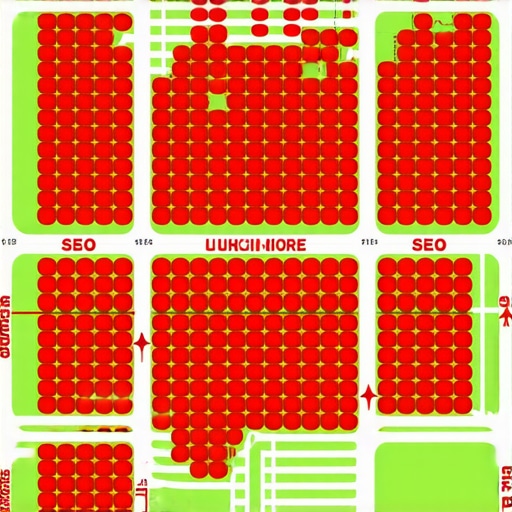
If you are still typing your business name into Google while sitting at your desk and feeling good about the result, you are lying to yourself. Google knows where you are. To get the real story, I use geo-grid trackers like Local Falcon or BrightLocal. These tools show you exactly where your ‘ranking bubble’ pops. I remember a locksmith who thought he was dominating the city, but the grid showed he was invisible two blocks past his front door. We had to pivot his entire strategy once we saw the red dots on the map. This is why I always include grid-tracking in my 4 ways to keep your maps seo list organized and effective. It’s the only way to see the ‘proximity wall’ you’re hitting in real-time.
How do I keep my map pin from disappearing?
Maintenance is mostly about feeding the beast fresh data. I personally set aside thirty minutes every Tuesday morning for ‘Profile Hygiene.’ I check for suggested edits from users—which can be a nightmare if a competitor tries to mark you as ‘permanently closed’—and I respond to every single review, even the short ones. If you stop, you’re basically telling Google your business is hibernating. For those struggling with sudden drops, I follow the diagnostic steps for fixing a business profile that stopped showing up to identify if it’s a technical glitch or an algorithmic shift. One specific thing to watch is the ‘Openness’ factor. Joy Hawkins from Sterling Sky recently noted that Google has been heavily weighting whether a business is actually open at the time of the search, meaning your rankings might naturally dip after you close for the night. This is a massive shift in how we think about ’24/7′ visibility.
The software I actually pay for every month
I’m a minimalist when it comes to tech stacks. You don’t need twenty subscriptions. I stick to a solid rank tracker, a review management tool, and a simple Canva account for geo-tagged images. You can find more about these in my breakdown of 5 pro-level tools every google maps ranking expert uses to spy on competitors. Looking ahead, I predict that by 2026, the ‘Map Pack’ will be almost entirely driven by video-shorts and AI-generated summaries of customer sentiment. The era of static text is dying. If you aren’t prepared for the local seo trends that will actually matter in 2026, you’re going to be invisible. Try this today: Take your most popular service, film a 15-second vertical video of you performing it, and upload it as a ‘Product’ or ‘Update’ on your profile. It’s a high-impact move that most of your competitors are too lazy to do.
Hard Truths I Learned After Chasing the Wrong Ranking Signals
Looking back at my first few years in local search, I realized I was focusing on the noise while ignoring the music. First, I learned that perfection is a trap; spending months on obscure directories yielded nothing compared to one high-quality, keyword-rich review. Second, I discovered that latest local updates 2025 what your business needs to know often boil down to real-world engagement rather than technical trickery. Finally, the biggest lightbulb moment was realizing that my maps seo list 2025 needed to be about human connection, not just satisfying a bot. If the neighborhood doesn’t know you, Google won’t either. It is about becoming the local authority that people actually talk about.
My Personal Tech Stack for Beating the Local Competition
You don’t need a massive budget to win, but you do need the right optics. I rely on Local Falcon to see the true geographic reach of a profile, as it reveals the ‘hidden walls’ that traditional trackers miss. For review management and ensuring I stay on top of my local seo checklist 2025 for fresh traffic, I trust BrightLocal for its clean interface and accurate reporting. I also keep Canva in my toolkit to quickly create the high-impact photos that Google’s Vision AI loves. These are the top seo tasks 2025 experts prioritize to maintain a competitive edge without burning out on manual data entry.
Stop Overthinking and Start Dominating Your Local Area
The digital landscape is constantly shifting, but the fundamentals of local trust remain the same. Don’t let the complexity of new local updates paralyze your progress. By implementing these 2025 seo tips, you are already miles ahead of the competitors who are still stuck in 2018 tactics. Your business deserves to be seen, and your community is waiting to find you. Take one small action today—whether it’s responding to an old review or geo-tagging a new photo—and watch how the momentum builds over time. Have you ever noticed your rankings shift unexpectedly after you updated your business hours or photos? Let me know in the comments below!