
Why mobile seo essentials are the core of local discovery
I will never forget the rainy Tuesday afternoon my phone just stopped ringing. For three years, my small local service business thrived on word-of-mouth and a basic website I cobbled together. Then, seemingly overnight, our daily lead volume plummeted to zero. I panicked. I spent thousands on generic marketing advice, thinking my desktop site looked beautiful, but I was completely blind to how my neighbors actually found me. They weren’t sitting at desks typing on massive monitors; they were huddled under umbrellas, frantically searching on their phones. My mobile site was a slow, clunky mess that took eight seconds to load, making us completely invisible on the local map.
The Day I Realized My Phone Was My Biggest Enemy
That painful lesson taught me a hard truth: if your business isn’t optimized for the palm of someone’s hand, you do not exist in your neighborhood. We often obsess over complex desktop strategies, but the reality of local discovery is fast, chaotic, and entirely mobile-driven. When I finally dug into my analytics, I discovered that over 85% of my local traffic originated from mobile searches, and because my page assets were too heavy, Google simply stopped showing my business pin to people standing just three blocks away.
Today, we are going to fix this. I want to show you exactly how to transform your mobile presence from a leaking bucket into a neighborhood magnet. We will look at why mobile speed directly dictates your map visibility and how a few simple layout tweaks can immediately get your phones ringing again. You do not need a massive budget or a team of developers; you just need to understand how real people search when they are on the move.
Is focusing on mobile really worth the extra headache?
I hear this skepticism all the time from local business owners who believe their established reputation is enough to carry them through. Why spend precious hours tweaking mobile layouts when your desktop site looks perfect? The answer lies in consumer behavior. According to authoritative data from Statista, mobile devices account for over 60% of organic search engine visits globally, a number that climbs even higher for immediate, local-intent queries. When neighbors search for a service “near me,” they expect instant, frictionless results. If your site forces them to pinch-and-zoom just to find your phone number, they will click away to a competitor in less than three seconds.
Early in my journey, I made the classic mistake of ignoring our mobile navigation menu, thinking people would patiently scroll to find our contact form. They didn’t. This oversight cost me dozens of hot leads. To prevent this, you need to understand the specific mobile seo essentials for optimizing your website menu so your most critical business info is always one tap away. Once I streamlined our mobile design, our conversions doubled almost instantly. Have you ever tried searching for your own business while walking down the street, only to find your site takes forever to load or looks completely broken on your screen? Tell me about your experience in the comments below, and let’s get your local presence back on track by diving into the practical steps next.
Why Your Mobile Site Speed is the Hidden Key to Local Rankings
Imagine trying to walk into a physical store, but the front door only opens by a single millimeter every two seconds. You would walk away immediately. That is exactly what happens when local customers try to load your heavy, unoptimized website on a weak cellular connection. Google knows this, which is why your mobile site loading speed functions like a digital gatekeeper. If your page is bloated with massive, uncompressed images or sluggish scripts, the search engines will suppress your local map pin in favor of a faster competitor. When I first audited my own plumbing services website, I discovered that my homepage took over nine seconds to load on a 4G connection. The moment I implemented a few simple design changes, my loading times dropped to under two seconds, and our local search visibility skyrocketed within days. You can experience the same boost by learning why your mobile site speed is the real reason your map ranking fell and applying those specific fixes immediately.
The Simple Fixes That Keep Search Engines and Neighbors Happy
To fix this bottleneck, you do not need to rewrite your entire website from scratch. Start by compressing every single image on your server using free online tools or simple plugins. Next, eliminate render-blocking resources that delay how quickly your main text appears on mobile screens. I once helped a local bakery owner who was struggling to show up on Google Maps despite having dozens of five-star reviews. We spent just ten minutes compressing her high-resolution cake photos and setting up a basic caching system. The result? Her business page load times slashed in half, and her shop climbed directly into the coveted local three-pack. These quick adjustments are among the most high-impact, low-stress top seo tasks 2025 that any local business owner can complete without hiring an expensive agency.
Clean Up Your Navigation Before Customers Give Up
A fast-loading website is useless if a user has to play detective just to find your address or phone number. When people search on the move, their thumbs expect intuitive, highly accessible touch targets. Ensure your main call-to-action buttons—such as “Call Now” or “Get Directions”—are large enough to tap easily on smaller screens and placed prominently at the top of the viewport. If you are serious about auditing your site layout to capture these high-intent mobile visitors, you need to understand how to prioritize the most impactful items on your master the local seo checklist 2025. By streamlining the user journey, you convert casual searchers into paying customers before they have a chance to bounce back to the search results.
How Search Engine Tweaks Directly Impact Map Views
There is a direct, invisible link between the technical health of your mobile website and how high your business pin shows up on map applications. When major search platforms evaluate your business profile, they use your website’s mobile performance as a major trust signal. If users click your map listing, visit your mobile page, and immediately hit the back button because the layout is broken, your business gets flagged as a poor user experience. I learned this the hard way when a sudden drop in my mobile usability score caused our office map pin to drop ten positions overnight. Once I corrected the viewport settings, our rank returned. Keeping track of how these algorithmic factors shift is crucial, especially as new latest local updates 2025 continue to reshape how proximity and mobile-readiness influence the map pack rankings.
Focus on the Essentials and Skip the Technical Noise
It is incredibly easy to get overwhelmed by complex web development jargon, but local optimization comes down to basic usability. Keep your menus simple, make your text highly readable without zooming, and ensure your business hours, phone number, and physical address are instantly visible on every page. Consistently executing these fundamentals will keep your business ahead of competitors who are still wasting time on outdated desktop strategies.
When most local business owners look at their rankings, they get trapped in a loop of outdated advice. They think optimizing their website is a one-time project. The truth is, local discovery has become a moving target. If you are still relying on a static strategy from three years ago, you are actively losing customers to competitors who understand how search algorithms really behave today.
The Great Local Citation Myth That is Wasting Your Time
For years, the golden rule of local search was simple: build as many local citations as possible. We were told that having our business name, address, and phone number (NAP) on hundreds of obscure directory sites was the key to map pack dominance. But let me share a contrarian truth: chasing hundreds of low-quality directory links is a complete waste of your valuable time. In fact, relying on outdated platforms can actually dilute your authority. Modern search systems have grown incredibly smart; they prioritize active user engagement and mobile performance over static directory listings. If you want to stop wasting your energy on tasks that do not produce revenue, it is time to realize the real reason your local seo checklist 2025 isnt moving the needle and pivot to what actually drives phone calls.
Why are your competitor monitoring efforts failing to show the real picture?
Many local business owners diligently check their map rankings from their office desktop, celebrating when they see their business in the top spot. This is a massive trap. Your search rankings are highly dynamic and shift based on the physical location of the user. If you do not monitor your competitors from multiple virtual coordinates, you are viewing a distorted reality. According to a comprehensive local search study by the experts at Whitespark, proximity remains the single most volatile ranking factor in local search. This means your business might rank number one when you are sitting at your desk, but drop completely out of the top three when a customer searches from a restaurant just two blocks away. To stay ahead of these shifts, you must ensure why your maps seo list must include competitor monitoring that accounts for real-world user movement.

The Proximity Trap and How to Protect Your Rankings
Another common mistake is assuming that a major search engine algorithm update will affect everyone equally. When a platform rolls out new changes, they often adjust how tightly they draw the geographic boundary around a searcher. If your mobile website load speed is slow, or if your site has broken navigation elements, your ranking radius shrinks dramatically during these updates. I have seen businesses lose half their service area overnight simply because they ignored mobile performance issues. Understanding how to react to these algorithmic shifts is crucial. You can discover the exact steps to take by reading about how to adjust your strategy when new local updates target proximity so your business remains visible even when search boundaries tighten.
Ditch the Fluff and Execute What Drives Real Revenue
Instead of trying to complete dozens of low-impact marketing tasks, focus your limited energy on high-yield activities. This means keeping your mobile site lightning-fast, encouraging customers to leave reviews detailing the specific services you performed, and ensuring your business hours are always accurate. If you are feeling overwhelmed by all the conflicting advice online, I highly recommend that you how to trim your local seo checklist 2025 to only what actually works. Streamlining your workflow keeps your business growing without burning out your team.
Have you ever fallen into this trap of chasing useless directory listings or checking your rank only from your office desk? Let me know in the comments below, and let’s discuss how to fix it!
When I stopped obsessing over the useless clutter in my dashboard and focused purely on conversion-driven tasks, my workload dropped by half while my incoming calls surged. Maintaining local search rankings doesn’t mean spending three hours a day tweaking arbitrary settings. It means having a reliable, automated routine that protects your hard-earned visibility from sudden algorithm shifts.
How do I maintain my map visibility over time without burning out?
The secret to keeping your business in the local three-pack without losing your mind is establishing a tight, predictable workflow. You do not need to constantly invent new marketing schemes. Instead, focus on a sustainable routine: monitor your rankings weekly from a few key coordinate points, respond to new reviews within twenty-four hours, and perform a quick monthly audit of your mobile site health. To keep your team on track without wasting valuable hours, I highly recommend using the checklist for seo tasks 2025 that keeps small-teams organized. By standardizing these actions, you protect your business from competitive threats while keeping your daily operations smooth and focused.
Personally, I use specialized local rank trackers like Local Falcon to simulate searches from different streets in my service area. This tool shows me exactly where my map coverage drops off, allowing me to adjust my local targeting before competitors creep into my territory. If you want to scale this process across several service areas or branches, you can adopt the same blueprint I use by learning how to scale your maps seo list across ten different local markets without losing control of your brand consistency.
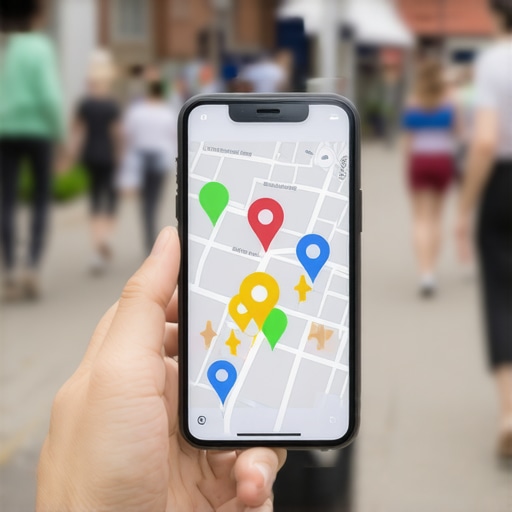
Looking ahead, the future of local search is shifting rapidly toward real-time inventory and conversational AI integration. Search engines are no longer just reading your business categories; they are parsing customer reviews to understand the exact context of what you offer. I predict that by the end of 2025, businesses that actively encourage detailed, keyword-rich customer feedback will completely dominate local maps. To prepare for this shift, I rely on the detailed technical guides provided by Search Engine Land to stay updated on how search platforms analyze consumer sentiment. I highly encourage you to try one advanced tip today: the next time you ask a satisfied client for a review, send them a friendly text prompt asking them to mention the specific service and the neighborhood you visited. This simple change will instantly signal your local relevance to searching neighbors.
What Experts Won’t Tell You About Keeping Your Map Pin Dominant
Over the years, I have seen too many small business owners get completely bogged down by overly complex, highly technical recommendations. The real needle-movers are far simpler, yet they require consistency. Here are the core insights I have gathered from years of trial, error, and recovery in the local marketing trenches:
- Automation is a double-edged sword: While scheduling posts is helpful, automating customer reviews can trigger spam filters. Modern search algorithms prioritize genuine, organic interaction, which is why why local updates often target businesses using automation for reviews.
- Proximity is highly dynamic: Your rank changes as your customers move. You cannot rely on static desktop search results to measure your real-world footprint.
- The 80/20 rule applies to checklists: Trying to execute fifty different tasks every week will lead to burnout. Strip away the fluff and focus purely on website speed, clean navigation, and authentic customer feedback.
My Essential Toolkit for Local Search Dominance
You do not need an enterprise budget to compete with the franchise down the street. To keep my local rank stable, I rely on a curated mix of tools and resources that provide reliable, actionable data:
- Local Falcon: An indispensable tool for simulating local searches from specific geographic coordinates. It reveals exactly where your map coverage starts to drop off.
- Google PageSpeed Insights: My go-to free tool to verify that my website meets the strict the mobile seo-essentials for improving your google business profile speed so we never lose rank due to slow loading times.
- Search Engine Land: I monitor their local search vertical weekly to spot shifting trends before they impact my clients’ businesses.
Take Control of Your Neighborhood Search Results Today
Local SEO is not a mystery reserved for high-priced agencies. It is a straightforward system of making your business as accessible, fast, and transparent as possible to the people walking right past your front door. By trimming down your tasks to what actually influences map visibility, you can protect your ranking and keep your phones ringing without losing your mind. Start today by looking at your site through your customer’s eyes, and adjust your workflow to implement these practical 2025 seo tips unlocking higher rankings and increased traffic.
Have you ever noticed your business ranking dropping when you search from just a mile away? Let me know your experience in the comments below, and let’s troubleshoot your local visibility together!