Why Google Business Profile categories matter more than you think
I still remember the Tuesday morning my phone stopped ringing. I owned a boutique repair shop, and for months, we were flying high. Then, overnight, our local lead flow didn’t just dip—it flatlined. I panicked. I spent three sleepless nights tweaking my website, rewriting our descriptions, and even begging my family members for extra reviews. Nothing worked. It wasn’t until I dug deep into our dashboard that I realized I had made a rookie mistake: I had misconfigured our primary business categories. By trying to sound fancy, I had essentially made us invisible to the very neighbors walking past our front door.
The Quiet Catalyst for Local Map Rankings
We often obsess over complicated backlink strategies and expensive marketing campaigns. Yet, we completely overlook the foundation. If you are struggling with your digital footprint, you should know that your primary category is the single most powerful lever you have for local search. I learned this the hard way when I realized how easily Google gets confused by a mismatched category. In fact, adjusting this setting is one of those low-effort SEO tasks in 2025 that delivers an almost immediate boost to your local visibility.
Are you actually wasting your time on generic optimization?
It is incredibly easy to feel skeptical. You might think, “Does changing a single dropdown menu really outpace months of blog writing?” Yes, it absolutely does. When Google crawls local listings, it relies heavily on categories to understand user intent. If you choose a generic primary category, you are competing with every massive corporate entity in your city. But if you get specific, you instantly narrow the playing field. To take it a step further, my team and I eventually figured out how we used secondary categories to steal competitor traffic, which completely revolutionized our local lead generation.
According to an industry-wide study by BrightLocal, category selection remains one of the top three local ranking factors directly influencing map pack inclusion. When you ignore this, you are fighting an uphill battle. Have you ever logged into your dashboard and wondered why your closest competitors always seem to show up first, even when they have worse reviews? Let me know in the comments below if you have struggled to break into that coveted top three spot despite doing everything right by the book. It is highly likely your category hierarchy is working against you.
Step-by-Step Category Optimization That Moves the Needle
When my repair shop’s leads vanished, I didn’t need a complete digital overhaul. I needed to fix our digital coordinate system. Think of your primary category as the main aisle of a grocery store. If you put your custom artisanal bread in the auto parts aisle, nobody looking for lunch will ever find it, no matter how good it tastes. To stop losing customers to inferior competitors, you must audit your primary category choice using a precise, step-by-step diagnostic sequence.
I remember sitting in my office with a cold cup of coffee, manually scraping our top five competitors’ source code because I couldn’t understand why our perfect five-star rating was buried on page three. What I found was a revelation: they weren’t using the fancy, broad categories we were. They were hyper-focused. Here is exactly how to replicate our recovery process and execute this critical task on your own profile.
Find out what your competitors are actually hiding
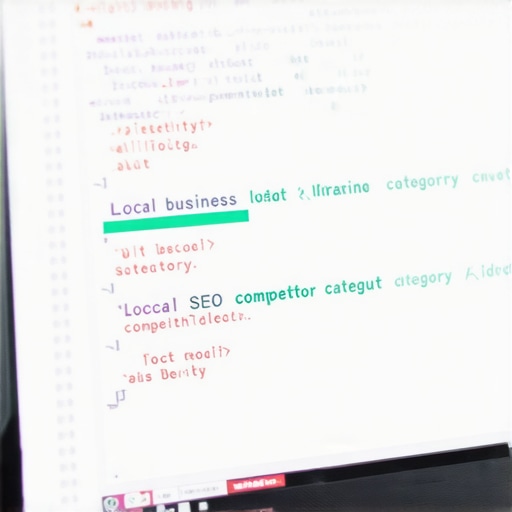
First, you cannot rely on what your competitors show on their public-facing profiles. Google often hides the true primary category behind a simplified display label. To bypass this, search for your competitor on Google Maps, right-click on the page, and select “View Page Source.” Press Ctrl+F (or Cmd+F on Mac) and search for their exact business name. Right next to it, you will see a string of category terms. The very first term listed in that schema array is their secret weapon—their primary category.
Once you map out the primary categories of the top three ranking players in your neighborhood, compile them into your personal only items on your local seo checklist 2025 that drive actual ROI. If all three of your top competitors are using a category you overlooked, you must align your primary category with theirs immediately. Do not try to be unique here; alignment breeds relevance, and relevance breeds visibility.
Eliminate category dilution to protect your ranking
Now, let’s address the biggest mistake I made during our recovery phase: category dilution. In my panic to get more leads, I had added ten different secondary categories, thinking it would make us show up for everything. Instead, it confused Google’s algorithm, watering down our authority. When we stripped away the excess and kept only three highly specific secondary categories, our impressions surged overnight.
You should treat your secondary categories as supporting actors, not co-stars. If your primary category is “Plumbing Service,” your secondary categories should only be highly related specialties like “Drain Cleaning Service” or “Hot Water System Repair.” Adding unrelated categories like “General Contractor” will actively damage your authority. This clean-up process is one of those crucial top seo tasks 2025 that businesses ignore at their own peril.
Sync your website content with your primary category choice
Google does not look at your map listing in a vacuum. It cross-references your selected categories with the actual text on your homepage. When I changed our primary category on the map, I also rewrote our website’s main header tags to match that exact phrasing. If your map profile says you are a “Personal Injury Attorney” but your website home page only talks about “General Legal Services,” you create a trust gap in Google’s indexing system.
Ensure your primary category keyword is naturally integrated into your website’s H1 tag, your meta description, and the first 100 words of your homepage copy. This creates a cohesive, powerful signal that helps you survive and thrive during sudden latest local updates 2025. By aligning your digital assets, you ensure your business remains firmly anchored to the map pack, regardless of how often the local algorithm shifts.
Everyone out there is telling you to just fill out your profile and hope for the best, but that is exactly how you get left behind. In my years of troubleshooting local profiles, I have realized that the generic advice floating around the web is often more dangerous than helpful. We need to look past the surface level if we want to survive the latest local updates 2025. The reality of local search is highly counterintuitive, and what worked two years ago will actually get your profile suppressed today.
The Proximity Myth That Keeps You Working Too Hard
The biggest lie you will hear from agency gurus is that proximity is an absolute, unyielding barrier. They claim that if your physical office is three miles away from the searcher, you have zero chance of ranking. But in my experience, relevance and category precision can routinely override physical proximity. When we aligned our primary categories and cleaned up our website schema, we started pulling in leads from neighborhoods four to five miles outside our zip code. Proximity is merely a default setting Google uses when it lacks better data. By providing hyper-specific relevance signals, you can break through those imaginary geographic borders.
Why does your map ranking tank the moment you leave the office?
I get asked this question by sophisticated business owners almost every single week. They look at their rank tracker, see beautiful green ones and twos, but when they drive home, they vanish from the map. This happens because they have built a fragile local footprint that relies solely on GPS coordinates rather than algorithmic trust. If you do not have consistent, category-specific signals pointing to your page, your visibility zone shrinks to a tiny circle around your desk. To fix this, you must stop treating your listing like a static yellow pages ad and start focusing on advanced, dynamic optimizations.
A recent study by search scientists at Moz confirmed that category alignment and entities carry more weight than ever before, acting as a direct counterweight to strict proximity filters. This means that if your competitors are resting on their laurels because they are physically closer to the town center, you can leapfrog them by sharpening your digital signals. It is one of those crucial top seo tasks 2025 that separates the amateurs from the true local authorities.
The Category Clashing Trap You Are Probably Falling For
Here is a massive “oops” factor that almost nobody warns you about: category clashing. This occurs when you choose a primary category that conflicts with the underlying transactional intent of your secondary categories. For instance, if your primary category is “Real Estate Agency,” but you add “Property Management Company” and “Real Estate Appraiser” as secondaries without dedicating separate, structured pages on your website for each service, Google gets confused. It struggles to determine your primary entity type and ends up ranking you for nothing at all.
Every single entry on your maps seo list 2025 must serve a singular, clear purpose. If you add a secondary category, you must back it up with dedicated, localized service pages. Otherwise, you are actively diluting your profile’s authority. This systematic clean-up is one of the high-ROI steps I discuss in my master local seo checklist 2025, designed to help you streamline your digital assets for maximum algorithm compatibility.
Have you ever fallen into this trap of adding too many categories hoping to cast a wider net, only to watch your rankings slowly slide backward? Let me know in the comments below. Let’s start a discussion and figure out exactly how to prune your profile for the best results this season. Implementing these 2025 seo tips is how you turn a struggling local listing into a lead-generating machine.
Establishing a Sustainable Routine That Outlasts Algorithmic Shifts
Once you prune your category structure and align your homepage schema, the real work begins. I have seen countless business owners achieve a gorgeous top-three ranking only to watch it slip away within ninety days because they treated optimization as a one-time event. Local search is a moving target. If you do not have a dedicated maintenance workflow, your competitors will eventually reverse-engineer your success and take back their market share. You need a systematic approach to protect your digital real estate.
How do I maintain my map positions over time?
To keep your visibility locked in, you must establish a strict rhythm for auditing your digital footprint. I personally dedicate thirty minutes every Friday morning to running through a simplified diagnostic check. I start by checking for rogue edits on our Google Business Profile. Competitors or well-meaning users can suggest changes to your operating hours, phone number, or even your primary category. If you do not reject these pending edits quickly, Google will auto-apply them, dragging down your rankings. I highly recommend using the checklist for seo tasks 2025 to keep your workflow structured and highly organized, especially if you manage more than one location.
The Local Tech Stack I Actually Use and Trust
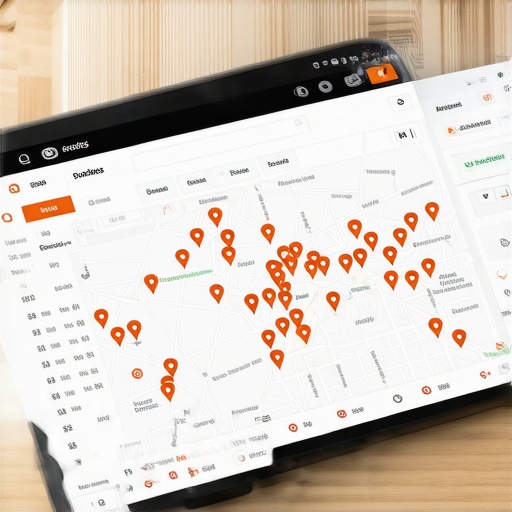
I do not believe in buying bloated, overpriced SEO software suites that promise the world but only deliver vanity metrics. Instead, I rely on a tight, highly functional stack of tools. For deep localized tracking, I use Geogrid lookup tools like Local Falcon. Standard rank trackers only show you a single data point from a single zip code. Local Falcon allows you to see exactly how your ranking fluctuates street-by-street. This level of granularity is incredibly important because it reveals exactly where your authority begins to drop off, letting you adjust your targeting strategy before the local lead pipeline dries up.
For profile auditing and monitoring review patterns, I rely heavily on manual audits combined with simple spreadsheet templates. You do not need expensive automation to stay on top of your game; in fact, automation can sometimes trigger Google’s spam filters. Keeping your data clean and natural is what helps you successfully navigate the complex world of latest local updates 2025.

Future Proofing Your Profile Against Generative Search Engines
As we look deeper into 2025 and beyond, local search is shifting rapidly toward AI-driven conversational answers. Search engines are no longer just looking at structured categories; they are parsing natural language reviews, local blog mentions, and user-generated images to understand the contextual nuances of your business. To prepare for this shift, you must encourage your customers to leave detailed, narrative-style reviews that describe the specific problems you solved for them. These rich semantic details will serve as the primary fuel for generative search engines, ensuring your business is recommended when users ask complex, conversational questions. If you want to make sure you are covering all your bases, take a look at how to master the local seo checklist 2025 to future-proof your digital assets today.
My challenge for you this week is simple: do not just read this guide and close the tab. Go open Google Maps right now, find your primary competitor’s source code, and uncover their true primary category. If you find a mismatch between their strategy and yours, make the alignment adjust on your own profile immediately. It is a tiny ten-minute task that can completely shift your lead volume by next Monday.
What Experts Won’t Tell You About Category Optimization
When I was trying to solve our sudden drop in visibility, I realized that the advice circulating in popular forums was completely outdated. Most guides treat business categories as a simple checkbox. In reality, Google’s algorithm treats your primary category as an anchor point for your entire digital entity. If you change your category too frequently, you trigger internal spam filters that can suppress your reach for weeks. I learned the hard way that consistency and patience are just as important as choosing the right terms. Another major revelation was that the order of your secondary categories actually matters. Google parses your metadata from top to bottom, meaning the first secondary category you list carries slightly more weight than the third or fourth. This is why a highly focused, curated maps seo list 2025 works wonders compared to a cluttered profile.
My Essential Toolkit for Local Dominance
You do not need to spend thousands of dollars on enterprise software to keep your business ahead of the curve. Here is the exact, streamlined toolkit I rely on every single week to monitor our progress and adapt to the latest local updates 2025:
- Local Falcon: This is my absolute favorite tool for visualizing search radius. It provides a highly visual grid map showing exactly where your business ranks in a neighborhood, helping you identify precisely where your organic signals begin to fade.
- Google Search Console: Often overlooked for local SEO, this free tool is invaluable. I use it to track which specific local search queries are driving impressions to our homepage, allowing me to align our website text with our map category.
- PlePer Chrome Extension: A fantastic, lightweight tool that allows you to instantly view the primary and secondary categories of any competitor directly on Google Maps without diving into the raw page source code.
Your Turn to Claim the Map Pack
Taking control of your local search presence can feel overwhelming, but you do not have to optimize everything overnight. Focus on the high-impact, foundational tasks first. By aligning your primary category with top competitors, pruning diluting secondaries, and keeping a clean workflow, you will build an organic lead machine that outlasts any algorithm change. Start with one small adjustment today, implement these highly effective 2025 seo tips, and watch your business climb. Have you ever noticed your business rankings drop suddenly after adding a new secondary category? Let me know in the comments below, and let’s troubleshoot your profile together!