
The ranking gap we found by looking at competitor photo counts
I was staring at my computer screen last Tuesday afternoon, rubbing my eyes in sheer disbelief. My client’s business had every technical advantage: a faster website, more authoritative backlinks, and a clean citation profile. Yet, we were stuck at the bottom of the Map Pack, looking up at a competitor whose business profile looked like it hadn’t been updated since 2019. It felt like I was banging my head against a brick wall. It didn’t make any sense until I stopped obsessing over the typical latest local updates 2025 and started looking at the assets. When I finally clicked into the competitor’s photo gallery, the lightbulb finally went off: they had nearly 600 customer-uploaded photos, while we were sitting pretty with exactly eight professional studio shots. This massive ranking gap was hiding in plain sight. Today, I am going to show you exactly how to find these hidden gaps and why your competitor’s camera roll is their secret weapon for local dominance. Have you ever felt like you’re doing everything by the book and still getting outranked by a business that looks ‘worse’ than yours?
Your competitors are winning because their customers are doing the work for them
I’ll be honest with you: early in my SEO career, I made a classic mistake. I treated Google Business Profiles like a static billboard. I thought that as long as the NAP data was perfect, I was 90% of the way to the top. I was so wrong. I was busy chasing NAP consistency and worrying about minor directory listings while the top-ranked businesses were encouraging their customers to document every single interaction. When I finally applied a competition analysis tactic that focused on visual asset volume, the reality became painfully clear. Google isn’t just looking for static data; it’s looking for a pulse. Photos are high-frequency signals that tell the algorithm your business is active, popular, and trustworthy. If you aren’t tracking how many images your rivals are adding every week, you are flying blind. I used to think a professional photoshoot once a year was enough, but in 2025, that is the quickest way to find your rankings sliding.
Can a few extra snapshots really beat a high-authority backlink?
It sounds almost too simple to be true, doesn’t it? We’re often told that local SEO is about complex schema and expensive link-building campaigns. While those things matter, the rules for the Map Pack are heavily weighted toward user engagement and visual proof. According to research from BrightLocal, businesses with more than 100 images on their Google Business Profile receive 520% more calls and 1,065% more website clicks than those with fewer. That isn’t just a slight edge; it’s a total takeover of the local market. If you are wondering why your competitors are still outranking you despite your better website, look at the volume of their imagery. In the next few sections, I’ll walk you through the exact audit checklist we use to identify these visual gaps and, more importantly, how to close them without spending a fortune on photographers. We are going to move beyond basic 2025 seo tips and get into the real meat of what moves the needle today. [image_placeholder_1]
Count the snapshots your rivals are hiding
To beat the guy at the top, you first have to understand the scale of your deficit. I don’t just mean looking at their total photo count; I mean categorizing them. When I run a maps audit without expensive tools, I open the top three competitors and my client’s profile side-by-side. I look for the ‘By Customer’ tab. If the leader has 400 customer photos and you have 5, you aren’t just losing a beauty contest; you are failing a massive trust test. Google’s vision AI scans these images to verify you actually do what you say you do. If a customer uploads a photo of a water heater, Google links your business to the ‘water heater repair’ entity far more effectively than any keyword-stuffed description ever could. This is exactly why the exact audit checklist we use focuses so heavily on visual volume. You need to know the ‘gap number’—the specific number of images you need to acquire to match the local average for the top 3.
Manual auditing is the only way to see the truth
Don’t rely on automated tools for this part. Click through the ‘Latest’ photos of your competitors. Are they posting them, or are the customers? If it’s the customers, look at the frequency. If they are getting three new photos a week, that is your new benchmark. I once worked with a local plumber in Austin who was obsessed with high-end branding. He’d spent $3,000 on a professional photographer to take ‘hero’ shots of his trucks. They were beautiful, but his rankings were stagnant. We realized his main competitor had hundreds of ‘ugly’ photos taken by homeowners showing messy basements and rusted valves. We immediately pivoted. We had his technicians take a quick ‘before and after’ shot on every single job. This simple shift is one of those 7 high-impact seo tasks 2025 that drive real results because it feeds the algorithm fresh, geo-relevant data. 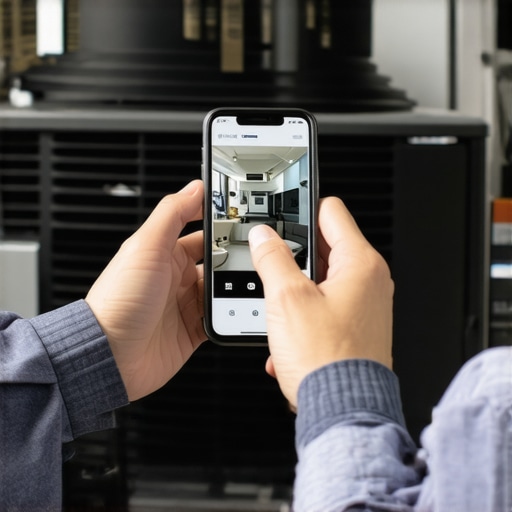
Turn your service calls into a content machine
The biggest hurdle is usually ‘how do I get the photos?’ You cannot do this alone. You need a system that makes photo collection a natural part of your workflow. Instead of just asking for a text review, you need to learn how to get more reviews that specifically include images. I tell my clients to offer a small ‘thank you’—like a discount on the next service—specifically for reviews that include a photo of the completed work. This creates a self-sustaining loop. When new customers see these authentic photos, they are more likely to hire you and, in turn, upload their own photos. This is the core of any successful maps seo list 2025 strategy. Stop trying to be a filmmaker and start being a documentarian. Google loves the raw, unedited reality of a local business because it’s much harder to fake than a backlink. By focusing on these high-frequency visual signals, you are essentially telling Google’s algorithm that your business is the most active and relevant solution in the area.
Let’s dig deeper into why most business owners are still stuck in the 2018 mindset of local search. I see it every single week: a business owner spends twenty hours a month manually correcting a minor typo on a random directory site from 2012, thinking they are finally going to master the local seo checklist 2025. They think they’ve struck gold by ensuring every comma is in the same place. I’m here to tell you that while consistency used to be the gold standard, it has become the biggest distraction in the industry. In the current landscape, entity signals and real-world activity have completely overtaken static data matching. If you are still chasing NAP consistency at the expense of generating fresh customer engagement, you are essentially polishing the brass on a ship that isn’t moving.
Your obsession with perfect data is probably a trap
The biggest “oops” factor I encounter with advanced clients is the Keyword-Stuffed Name Trap. We’ve all seen it: ‘Best Plumber Austin Emergency 24/7 Repairs.’ Does it work? Sometimes, in the short term. But here is the nuance most people miss: Google’s latest AI-driven filters are getting incredibly aggressive at identifying ‘manufactured’ relevance. According to the Whitespark Local Search Ranking Factors study, while keywords in the title are a heavy hitter, they are also the primary trigger for competitor-led manual spam reports. I’ve seen businesses lose a decade of ranking authority overnight because they pushed their luck too far. Instead of gaming the title, focus on the top seo tasks 2025 that build genuine authority, such as diversifying your photo types and responding to reviews with specific service-related context.
How many times have you keyword-stuffed your way into a suspension?
If you have ever woken up to find your profile has vanished, you know the panic. This usually happens when you ignore the latest local updates 2025 regarding business name policies. The advanced mistake isn’t just the name; it’s neglecting the ‘hidden’ entity signals. Google is now comparing your profile against your business license, your social media presence, and even your street view imagery. If your digital footprint looks like a robot built it, you’re going to get filtered out. This is why the exact seo tasks 2025 we prioritize on Monday mornings are focused on auditing these ‘trust gaps’ rather than just checking boxes. 
The hidden filter that stops your rankings from growing
There’s a subtle mechanism in the Map Pack often called the ‘proximity filter.’ Many people think if they aren’t ranking, they just need more links. In reality, you might be getting filtered because you are too similar to a nearby competitor. If your category selection and content are identical to the guy next door, Google will only show one of you. You have to differentiate your ‘entity.’ Use diagnostic steps for fixing a profile that prioritize unique service descriptions and customer-uploaded videos. Have you ever fallen into this trap of being too ‘perfect’ or just like everyone else? Let me know in the comments. We need to stop looking at the maps seo list 2025 as a static document and start treating it as a living, breathing strategy of differentiation.
Scale your local visibility without losing your mind
Once you’ve identified the gaps and started filling them with fresh visual data, the real challenge begins: consistency. I’ve seen countless businesses spike into the top three only to vanish three months later because they treated their local seo checklist 2025 as a one-time project. Local search is a momentum game. If you stop feeding the engine, Google assumes your business has gone stale. To avoid this, I transitioned my workflow into a set of exact seo tasks 2025 we prioritize on Monday mornings, focusing on high-leverage maintenance rather than busy work. The goal is to move from manual labor to a system that captures data as you work.
The specific stack that keeps me sane
I don’t use a dozen tools; I use three that actually work. For deep-dive analysis, I rely on the PlePer Local SEO Chrome extension. It allows me to see the exact categories and CID numbers of my competitors at a glance, which is vital when you are trying to fix your maps seo list after the latest updates. For tracking, I avoid generic rank trackers and use LocalFalcon because its grid-based reporting shows the ‘proximity bleed’ that traditional lists miss. Finally, for my team in the field, we simplified everything. We stopped using complex apps and started using a dedicated WhatsApp group where technicians drop job-site photos with location tags turned on. This raw data is our most valuable asset for staying current with the latest local updates 2025. According to research by Sterling Sky, the presence of recent photos is a significant driver of ‘justification’ snippets in search results—those little bolded lines that tell a user you have exactly what they need.
How can I maintain my Map Pack ranking through every update?
Maintenance is about two things: monitoring and adjusting. Every month, I look at the local ranking signals that actually changed and compare them against our internal performance. If we see a dip, we don’t panic and change everything; we look at our photo frequency and review velocity. I’ve found that 4-ways-i-updated-my-local-seo-checklist-2025-for-fresh-traffic usually involves tightening up our response time to customer queries and ensuring our ‘Services’ section isn’t just a list, but a detailed explanation of our expertise. Looking ahead, I predict that by 2026, Google will place even more weight on video verification of service performance. We are already seeing the seeds of this in the way Google treats ‘Business Video’ uploads. If you want to be ahead of the curve, start encouraging your customers to upload 5-second video clips of the finished result, not just photos. This is how you future-proof your maps seo list 2025 before the competition even knows the rules have changed. My challenge to you today: open your Google Business Profile and upload one short, 10-second video of your team in action. It’s a tiny move that signals massive ‘life’ to the algorithm.
The Moment I Realized Pure Consistency Was Killing My Rankings
One of the toughest pills to swallow was admitting that my perfectly curated maps seo list 2025 didn’t matter if nobody was interacting with the business profile. I spent months cleaning up minor typos in obscure directories, only to watch a messy competitor soar past us because they had real, raw customer activity. I’ve learned that a slightly inconsistent NAP with 200 photos beats a perfect NAP with zero photos every single time. Another massive lightbulb moment was seeing how much Google values the ‘pulse’ of a profile; if you haven’t posted a real photo in two weeks, you’re effectively invisible. This is why the 4 overlooked tasks that save a dying maps seo list focus so much on recent, user-generated signals rather than legacy data cleanup.
The Only Arsenal You Need to Audit Your Rivals
I don’t believe in hoarding a massive subscription list. To stay on top of the latest local updates 2025, I keep it lean. I use PlePer for its category insights—it’s the fastest way to see if a competitor is using a secondary category you missed. I trust LocalFalcon for ranking audits because its grid view reveals the truth about your proximity reach. For small business owners who are short on time, I highly recommend checking out these practical 2025 seo tips which simplify the process down to what actually moves the needle. These resources have been my compass whenever the algorithm starts to shift unexpectedly.
[image_placeholder_1]
Stop Overthinking and Start Dominating Your City
You don’t need a marketing degree to win this game; you just need to be more ‘real’ than the person down the street. Local search in 2025 is about transparency and proof. By implementing these 2025 seo tips, you’re building a foundation that won’t crumble during the next algorithm shift. It is time to stop worrying about the perfect technical setup and start focusing on the authentic stories your customers are already telling. Go out there, grab your phone, and document your next successful job. Your future customers and Google’s algorithm are waiting to see it. What’s the biggest ‘hidden gap’ you’ve noticed when looking at your top competitor’s profile? Let me know in the comments below!