The Map Embed Strategy That Actually Helps Your Business Show Up in Nearby Neighborhoods
The Map Embed Strategy That Actually Helps Your Business Show Up in Nearby Neighborhoods
For years, local business owners have faced a frustrating reality: you rank like a king in the city block where your office is located, but as soon as you cross into the next neighborhood, your visibility vanishes. This “proximity wall” has only become more rigid following the algorithm updates of late 2024 and early 2025. As we look toward 2026, the challenge for local service businesses – from plumbers and roofers to law firms – is no longer just about having a presence; it is about expanding your “radius of relevance.”
My name is Michelle G., and in my years as a Local SEO Analyst, I have seen countless businesses struggle with the limitations of the Google Map Pack. The common complaint is always the same: “Why does my competitor three miles away show up in this neighborhood, but I don’t?” The answer usually lies in how Google perceives your proximity and prominence. One of the most misunderstood, yet powerful, tools in our arsenal to combat this is the strategic use of map embeds.
There is a persistent debate in the SEO community: are map embeds a direct ranking factor or just “visual fluff”? While a simple iframe on a contact page might not move the needle much on its own, a sophisticated map embed strategy serves as a critical relevance signal. When executed correctly, it bridges the gap between your physical location and the surrounding neighborhoods you serve, telling Google’s crawlers exactly where your business belongs in the local ecosystem. In this guide, we will move beyond the basics and explore the advanced tactics required to dominate the local map pack in 2026.
Why Map Embeds Matter for Google Business Profile SEO
To understand why embeds are vital, we must first look at the three pillars of local search: Proximity, Relevance, and Prominence. Proximity is the distance between the searcher and the business. Relevance is how well a local business profile matches what someone is searching for. Prominence is how well-known a business is. While you cannot easily change your physical proximity, you can influence your relevance and prominence through technical alignment.
When you implement a high-quality google business profile seo strategy, you are essentially providing Google with a map of your digital and physical authority. An embed is more than just a picture; it is a piece of code that contains your CID (Customer ID) or Place ID. These are unique identifiers that Google uses to track every entity in its database. By embedding your specific Map CID on your website, you are creating a “digital handshake” between your domain and your Google Business Profile (GBP).
Google’s crawlers are increasingly sophisticated. In 2026, they don’t just “see” an iframe; they parse the connection. If your website content discusses a specific neighborhood and that page features a map embed centered on that area or showing your business’s relation to it, you are reinforcing a “geo-signal.” This helps rank higher on google maps by proving to the algorithm that your business is a relevant entity for searches originating in that specific locale, even if your office is a few miles away.
Furthermore, internal linking plays a massive role in how this authority is distributed. For instance, understanding The Hidden Link Between Map Embeds and Organic Local Traffic can help you see why these embeds shouldn’t be isolated to a single page. They should be part of a broader architecture that signals your service area clearly to search engines.
The “Neighborhood” Strategy: Beyond the Contact Page
The biggest mistake I see in local SEO is the “Contact Page Trap.” Most businesses put one map on their contact page and call it a day. If you want to rank in nearby neighborhoods, this is not enough. You need to move toward a “Hyperlocal” content model.
The era of “Thin City Pages” is over. Google has become very efficient at identifying pages that are just copies of each other with the city name swapped out. To rank in a neighboring area, you need a dedicated page that provides actual value to that community. This is where the map embed strategy becomes tactical. Instead of embedding a general map of your business, you should embed a map that highlights your business in relation to that specific neighborhood.
Creating Hyperlocal Relevance
- Neighborhood-Specific Content: Write about local landmarks, community events, or specific projects you have completed in that area.
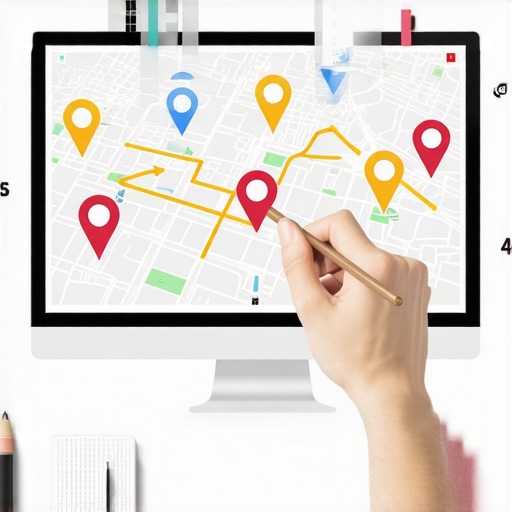
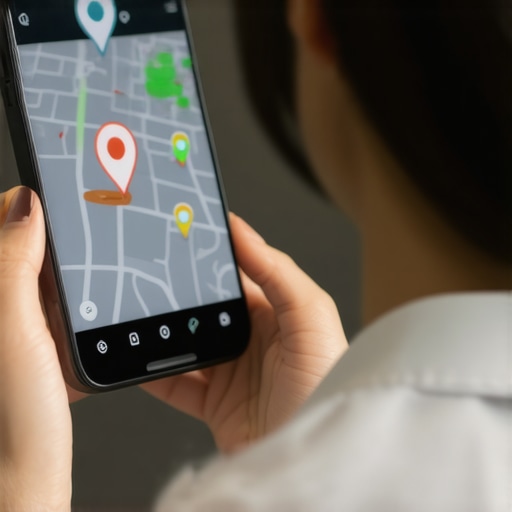
- Localized Map Embeds: Use the Google Maps API to center the map on the neighborhood while keeping your business pin visible. This shows the “proximity” between the service area and your home base.
- Geo-Tagged Media: Combine your map embeds with images of your team working in that specific neighborhood.
If you find that your neighborhood pages aren’t performing, you might be falling victim to common pitfalls. Check out The 4 Things Actually Holding Your City Page Rankings Back to audit your current approach. Often, the missing link is the lack of a strong geo-signal that a map embed provides. By tying your content to a physical location via an embed, you are giving Google the “proof” it needs to display your business in the local pack for that area.
Remember, the goal of 4 Map Pack Ranking Tactics for Crowded Service Areas is to stand out. In a crowded market, everyone has a GBP. Not everyone has a website that effectively communicates their service boundaries through interactive map data.
Advanced Tactic: The Driving Directions Embed
One of the most underutilized tactics in local map pack seo is the driving directions embed. This goes a step beyond the standard pin. By embedding a map that shows a pre-calculated route from a major local landmark or a neighboring town to your business, you are providing Google with incredibly rich geo-relevancy data.
Why does this work? It establishes a “path of travel.” For Google, this is a strong signal that your business is accessible and relevant to people in that starting location. For Service Area Businesses (SABs) that don’t have a physical storefront for customers to visit, this is even more critical. It helps define the boundaries of where you operate. If you embed a map showing directions from the “North End” to your headquarters, you are semantically linking your business entity to the “North End” entity.
This tactic is a core part of a Master the Local SEO Checklist 2025: Boost Your Visibility Today. It moves the needle because it provides “user intent” signals. Google sees that you are helping users find their way to you, which increases your “Prominence” score. It also helps clarify your service area for the Latest Local Updates 2025: What Your Business Needs to Know, where Google has placed a higher emphasis on the actual physical movement and search patterns of users.
Using the Search Mode in Google Maps Embed API
For those looking for a truly technical edge, the Google Maps Embed API “Search Mode” is a game-changer. Most people use “Place Mode” (a single pin). Search Mode allows you to display the results of a search on the map. For example, you can embed a map that shows “Plumbers near [Neighborhood Name]” where your business is the primary result.
This does two things:
- It reinforces the keywords you want to rank for (e.g., “Plumbers”).
- It places your business in the context of the local search market for that specific neighborhood.
Using local seo tools to identify which neighborhoods have the highest search volume but the lowest competition allows you to target these areas specifically with Search Mode embeds. When you combine this with A Simple Local Schema Strategy to Help Google Understand Your Service Area, you create a powerhouse of local signals that are hard for competitors to beat. You are essentially telling Google: “Here is what I do, here is where I do it, and here is the proof from my own map data.”
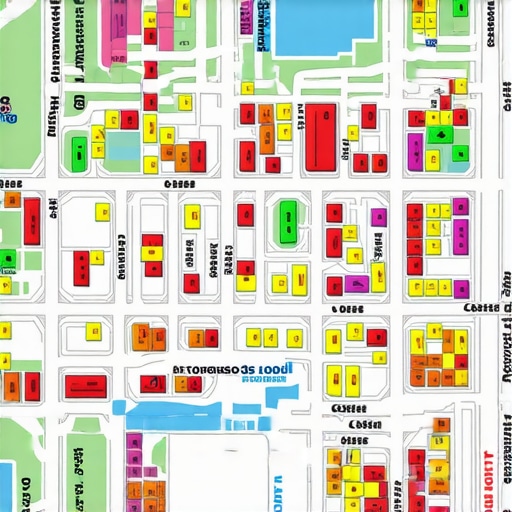
Monitoring the success of these technical changes is vital. Many businesses fail because they rely on outdated metrics. This is Why Your Local Rank Tracker Might Be Giving You False Hope – you need to see how you appear to actual users in those neighborhoods, not just a generic “city-wide” rank. Using local seo software helps you visualize these “geogrids” of ranking, showing you exactly where your map embed strategy is working and where you still have “gray zones.”
Common Mistakes & Performance Optimization
While map embeds are powerful, they can be a double-edged sword if implemented poorly. The most common issue is site performance. Maps are heavy. They require multiple calls to Google’s servers, which can slow down your page load speed – a known ranking factor for both organic and local search.
How to Optimize Your Embeds:
- Lazy Loading: Ensure your maps only load when a user scrolls down to them. This keeps your initial “Largest Contentful Paint” (LCP) fast.
- API Key Management: Use the official API rather than just grabbing an iframe from the consumer version of Google Maps. This gives you more control and better data.
- NAP Consistency: Ensure the Name, Address, and Phone number (NAP) displayed in the map matches your website footer and your GBP exactly. However, don’t obsess over every minor variation. As I’ve discussed in
Why Chasing NAP Consistency Is a Waste of Time for Most Local Businesses, Google is smart enough to handle minor formatting differences; focus instead on the CID and Place ID accuracy.
Another mistake is using “broken” pins or unverified locations. If your GBP is not properly optimized, the embed will carry that “weakness” over to your site. You should always ensure your profile is healthy before using it as a primary signal. We often see success when clients look at How We Optimized a Business Profile for Proximity Without Spamming Keywords, focusing on natural relevance rather than over-optimization.
The Proximity Challenge of 2026
As we move further into 2026, Google’s “Proximity” filter is only getting tighter. The algorithm is designed to show the most immediate results to a user. To break through this, your “Relevance” and “Prominence” must be high enough to override the distance factor. This is the heart of google maps seo.
Map embeds are a way to “artificially” (but legitimately) increase your prominence in a neighborhood where you don’t have a physical office. By associating your business entity with the geographic coordinates of your target neighborhoods through your website’s architecture, you are providing the context Google needs to include you in the Map Pack. This is a far more effective strategy than the old methods of “geo-tagging images,” which, while still useful, have become a secondary signal compared to direct API-driven map data.
Conclusion: Audit and Dominate
The map embed strategy is not a “set it and forget it” tactic. It requires a thoughtful approach to site architecture, neighborhood-specific content, and technical API implementation. In the competitive landscape of 2026, simply having a Google Business Profile is the bare minimum. To truly dominate, you must weave your location data into the very fabric of your website.
Start by auditing your current location pages. Are you using specific CID-based embeds? Are you utilizing driving directions to bridge the gap between neighborhoods? If not, you are leaving visibility on the table. I recommend using SEO Viper Tools to run a comprehensive google business profile audit tool check. This will help you identify the “blind spots” in your current local reach and provide a roadmap for where your map embeds can have the most impact.
By focusing on hyperlocal relevance and technical precision, you can expand your business’s reach and ensure that when someone in a nearby neighborhood searches for your services, your name is the one they see at the top of the map pack. Don’t let proximity be a barrier – make it your advantage with a sophisticated google maps ranking service approach.