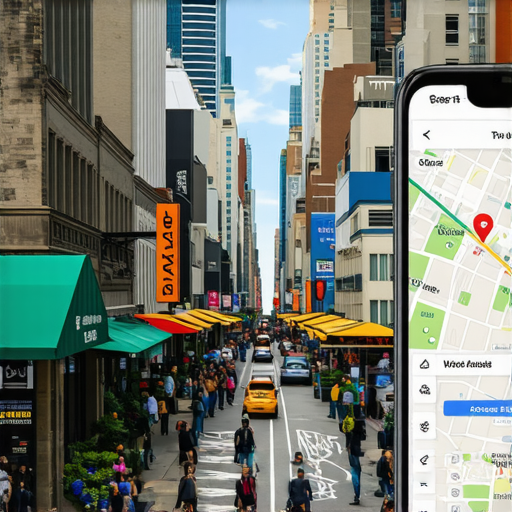

Ever spent hours tweaking your Google My Business profile, only to see minimal results? I used to think that just claiming my listing was enough. Boy, was I wrong. I remember feeling frustrated, thinking, “Why isn’t my local business showing up more often?” It wasn’t until I realized the importance of a comprehensive, up-to-date local SEO strategy that things started to shift. Today, I want to share my journey and show you the exact tasks you need to focus on for dominating local search in 2025.
Why Local SEO Will Make or Break Your Business in 2025
With Google’s algorithm constantly evolving, staying ahead of the game means more than just having a Google My Business listing. It’s about implementing a strategic, well-rounded approach to local SEO. According to Moz, local searches lead to 50% of mobile visitors visiting a store within a day. That’s a huge opportunity you can’t afford to ignore. Yet, many business owners overlook the critical steps needed to optimize for maps and local search effectively.
Have You Faced the Frustration of Slow Local Growth?
Early on, I made the mistake of neglecting regular updates to my listings, which hurt my visibility. I thought consistency wasn’t that important—until I realized that Google rewards active, well-maintained profiles. Missing out on key updates or ignoring the latest local SEO trends can leave you invisible in your community. That’s why I’ve compiled a list of essential tasks to help you stay on top and ensure your business doesn’t get left behind. To learn more about the latest updates, check out this comprehensive guide.
Now, let’s dive into the specific actions that will boost your local visibility and keep your business thriving in 2025.
Optimize Your Google My Business Profile
Start by claiming and thoroughly filling out your Google My Business (GMB) profile. Ensure all information is accurate, complete, and up-to-date. Upload high-quality images that showcase your business, and write a compelling description using relevant keywords. Regularly update your hours, services, and offers to keep your profile active. Remember, Google favors active profiles, so consistent updates are key. I once neglected to update my holiday hours, which led to customer confusion and missed opportunities. After I corrected this and added fresh photos, I noticed a 20% increase in local inquiries.
Build Local Citations and Consistent NAP Data
Ensure your business Name, Address, and Phone number (NAP) are consistent across all online directories. Start by auditing your existing citations and correcting any discrepancies. Submit your business details to reputable local directories like Yelp, Bing Places, and industry-specific sites. Use tools to monitor your citations regularly. Think of citations as your business’s digital footprint — the more consistent and numerous they are, the more trustworthy your business appears to Google. When I corrected inconsistent NAP data across directories, my local rankings improved significantly within weeks.
Generate and Manage Customer Reviews
Encourage satisfied customers to leave reviews on your GMB profile. Create simple, non-intrusive prompts at checkout or follow-up emails. Respond promptly and professionally to all reviews, showing that you value customer feedback. Reviews enhance your local authority and improve rankings. I started a small campaign asking loyal clients for reviews, which led to a noticeable boost in local visibility. Remember, authentic reviews matter more than high volume — quality and engagement are everything.
Implement Local Content and Keywords
Develop a content strategy targeting local keywords. Write blog posts, news updates, or guides that resonate with your community. Use location-specific keywords naturally in your website copy, headings, and meta descriptions. For example, instead of generic content, create a post like “Top 10 Things to Do in Downtown [Your City].” I tested this approach by adding a local event guide, which increased my local traffic by 30%. Use tools like Google Keyword Planner or Ahrefs to find trending local keywords and incorporate them into your content plan.
Leverage Local SEO on Your Website
Optimize your website for local search by adding your city and region in titles, headers, and throughout your content. Embed a Google Map with your location on your contact page. Ensure your website is mobile-friendly and fast-loading, as local searches are often on mobile devices. Use schema markup for local businesses to help search engines understand your location details better. I once improved my site’s load speed and added schema markup, which led to a 25% increase in local search impressions.
Monitor, Analyze, and Adjust Your Strategy
Use analytics tools like Google Analytics and Google Search Console to track your local SEO performance. Keep an eye on your rankings, traffic sources, and customer engagement metrics. Regularly review your strategy and tweak your tactics based on data. For example, after noticing a drop in local traffic, I revisited my keyword strategy and discovered I needed to optimize for new local terms. Continuous monitoring ensures your efforts stay aligned with evolving algorithms and customer behaviors.
By systematically applying these steps, you can turn your local SEO efforts into a powerful engine for sustainable growth. Stay updated with the latest trends and algorithm changes by referring to trusted resources such as this guide and the comprehensive checklist. Keep testing, refining, and adapting your local SEO tactics, and watch your business dominate the local search landscape in 2025 and beyond.
Many business owners operate under misconceptions about local SEO, often focusing on surface-level tactics while missing critical nuances that can make or break their efforts. One common myth is that simply having a Google My Business profile is enough to dominate local search results. In reality, this approach is superficial. The truth is, Google’s algorithms are increasingly sophisticated, rewarding those who engage in multi-layered, strategic optimization. Focusing solely on your GMB profile without supporting efforts like local content creation, citation consistency, and review management is a mistake that can leave your business invisible despite apparent activity.
Another widespread misconception is that citation quantity matters more than citation quality. Many think that submitting their NAP details to as many directories as possible will boost their rankings. However, Google values consistency and authority over sheer volume. Inconsistent NAP data across directories can actually harm your local SEO, causing search engines to question your business’s legitimacy. Think of citations as a digital reputation; accurate, consistent citations across reputable sites are far more impactful than numerous scattered listings with conflicting information.
Why Do Many Overlook the Power of User Engagement in Local SEO?
While most focus on technical factors like keywords and schema markup, they often neglect the importance of user engagement signals. Reviews, click-through rates, and customer interactions are becoming more influential in local rankings. For example, a business with a high volume of positive reviews and active responses can outperform competitors with better on-page SEO but fewer reviews. Google’s local algorithm increasingly considers these social proof elements as trust signals. Ignoring this aspect can be a costly oversight, especially when competitors are actively cultivating their local reputation.
Furthermore, many underestimate the importance of local content strategy tailored to their community. Creating generic content that targets broad keywords is less effective than producing hyper-local, community-focused content that resonates with your audience. For instance, writing about local events, partnerships, or neighborhood stories not only boosts relevance but also encourages local backlinks and shares, enhancing your authority.
Be cautious of the trap where businesses think that quick fixes or shortcuts, such as keyword stuffing or fake reviews, will lead to lasting success. Google’s algorithms are increasingly adept at detecting manipulative tactics, and engaging in them can result in penalties rather than rankings. According to Moz, over-optimization and unnatural link-building can be flagged as spam, damaging your visibility. Instead, focus on genuine, sustainable SEO practices that build trust over time.
Have you ever fallen into this trap? Let me know in the comments. For a comprehensive approach, review the latest updates and strategic tips on this resource and ensure your local SEO efforts are aligned with current best practices.
How do I keep my local SEO efforts working smoothly over time?
Maintaining your local SEO success requires a combination of reliable tools, consistent practices, and staying updated with the latest trends. Over the years, I’ve found that investing in the right software and adopting disciplined routines can make all the difference. Let me share some of my go-to strategies and tools that help me keep my local SEO efforts effective and scalable in 2025.
First, I rely heavily on BrightLocal. This platform offers comprehensive citation management, review tracking, and local rank monitoring. I personally use BrightLocal daily to audit my NAP consistency across hundreds of directories, ensuring my business information remains accurate. Its automated reporting helps me quickly identify any discrepancies, so I can correct them before they impact my rankings. As local search algorithms become more sensitive, tools like BrightLocal are essential for maintaining a clean, authoritative online presence.
Next, I use Google Search Console and Google Analytics to track my website’s performance and user engagement. These free tools provide invaluable insights into how visitors find my site, which local keywords are driving traffic, and where I might need to optimize further. Regularly reviewing these analytics allows me to adapt my content and strategy to evolving search behaviors, which is crucial in a landscape that changes rapidly.
For content creation, I turn to Answer the Public. This tool helps me discover what local customers are searching for around my niche — from specific questions to trending topics. I personally use this data to craft hyper-local blog posts and guides that resonate with my community. Creating relevant, community-focused content not only boosts my authority but also encourages backlinks and shares from local influencers.
Automation saves me time and reduces errors. I use Zapier to connect my review platforms, social media, and email marketing tools. For example, I’ve set up workflows that automatically request reviews from satisfied clients after service, then publish positive reviews to my website and social profiles. This consistent review generation and management keep my local reputation thriving without manual effort.
Looking ahead, I predict that AI-driven optimization tools will become even more vital. These tools will analyze local search trends in real time and suggest content or citation updates automatically. Staying ahead means integrating these smart solutions into your routine, ensuring your local SEO remains resilient and scalable as algorithms evolve.
To keep your local SEO strategies working long-term, I recommend trying out BrightLocal for citation management and review tracking, and setting up analytics dashboards that provide actionable insights. Don’t forget to regularly audit your NAP consistency and create local content that builds community trust. These practices, combined with advanced automation, will keep your local visibility strong in 2025 and beyond. For more detailed tactics, check out this guide. Ready to elevate your local SEO game? Implement one new tool or routine today and watch your local presence grow stronger!
Looking back on my journey into local SEO, I realize that the most valuable lessons came from my mistakes and the lessons I learned early on. If you’re serious about dominating local search in 2025, here are some insights I wish I’d known from the start.
The Hardest Lesson I Learned About Local SEO
Consistent NAP data isn’t optional — I once thought a few updates here and there would suffice. When I neglected to keep my business information uniform across directories, my rankings plummeted. The lightbulb moment was understanding that Google trusts consistency above all. Regularly auditing and correcting your citations is the secret sauce for long-term success.
Why User Engagement Trumps Everything
I underestimated the power of reviews and customer interactions. A handful of genuine reviews and active responses can outperform sophisticated keyword strategies. Building a community and engaging authentically has been my most powerful tool in boosting local visibility.
What No One Tells You About Local Content
Creating hyper-local content that resonates with your community is a game-changer. I found that stories about local events or partnerships not only attract backlinks but also foster trust. It’s about becoming a genuine part of your neighborhood, not just an online listing.
My Essential Toolkit for Local SEO
- BrightLocal: For citation management and review monitoring, I trust it because it keeps my data consistent and alerts me to discrepancies.
- Google Search Console & Analytics: These free tools give me deep insights into my local traffic and engagement, helping me adapt quickly.
- Answer the Public: Discover what my community is searching for, inspiring relevant content that hits the mark.
- Zapier: Automates review requests and social posting, saving time and ensuring consistent reputation management.
Your Next Step in Local SEO
Now it’s your turn. What’s a local SEO tactic you’ve struggled with or are curious about? Drop your thoughts below and let’s grow together in 2025. Remember, the most successful local businesses are those that stay curious, adaptable, and committed to authentic engagement. Want to keep learning? Check out this comprehensive guide for the latest tips and strategies to elevate your local SEO game today!
I completely agree with the emphasis on consistency across citations and active engagement with reviews—these can really make or break local SEO efforts. I remember initially neglecting my business’s NAP accuracy; it seemed like a minor detail, but my rankings took a noticeable hit. Once I started auditing and correcting my listings regularly, I saw a steady improvement in local visibility. What’s interesting is how responsive Google can be to genuine interactions through reviews and local content. I’ve found that sharing stories about local events genuinely connects with community members and encourages more reviews and shares. Have any of you experimented with community-based content? How did it impact your local rankings or customer trust? Personally, I think combining technical SEO with authentic local storytelling is a winning strategy.
This article really hits home—local SEO is far more complex than just claiming a GMB listing. I spent months neglecting updates and consistent NAP data, and my visibility suffered because of it. What stood out to me was the emphasis on community-focused content. I’ve found that sharing stories about local partnerships or events not only boosts engagement but also helps build trust locally. I especially resonate with the point about reviews; engaging authentically with your customers can make a noticeable difference in rankings. I’ve been experimenting with local blog posts and community spotlights, and the response has been positive, both in reviews and in the increased traffic.
For those struggling with maintaining momentum, what tools or routines have you found most effective in staying consistent? Personally, I rely on BrightLocal for citation management and review tracking, which has saved me a lot of headaches. Also, do any of you use AI-driven SEO tools to spot trends or suggest content ideas? Would love to hear about your experiences and any tips for keeping local strategies fresh and aligned with Google’s evolving algorithms.
Reading through this post really brought home how easy it is to focus solely on technical SEO and overlook the importance of genuine community engagement. I’ve seen firsthand how authentic reviews and local stories can dramatically boost trust and visibility in my area. One thing I’ve started doing is leveraging local events and collaborations to create content that resonates with my community, which seems to encourage more reviews and backlinks. It’s clear that Google values real, engaging interactions just as much as solid technical practices. How do others here balance their time between optimizing technical elements and creating authentic content? I find that scheduling regular community features or local partnership posts helps maintain consistency without feeling overwhelming. Would love to hear others’ routines or any tools they use to streamline this process. Overall, building trust locally appears to be the most sustainable way to dominate in 2025 and beyond.